Description
Location: Tofo, Mozambique
Duration: 2-12 weeks
Start Dates: There are start dates on the first Monday of each month from January to November.
Cost: from £1,622 GBP
Includes: all food, accommodation, airport pickup, orientation and all project related activities
Does not Include: flights, travel insurance, visas and vaccinations
Benefits:
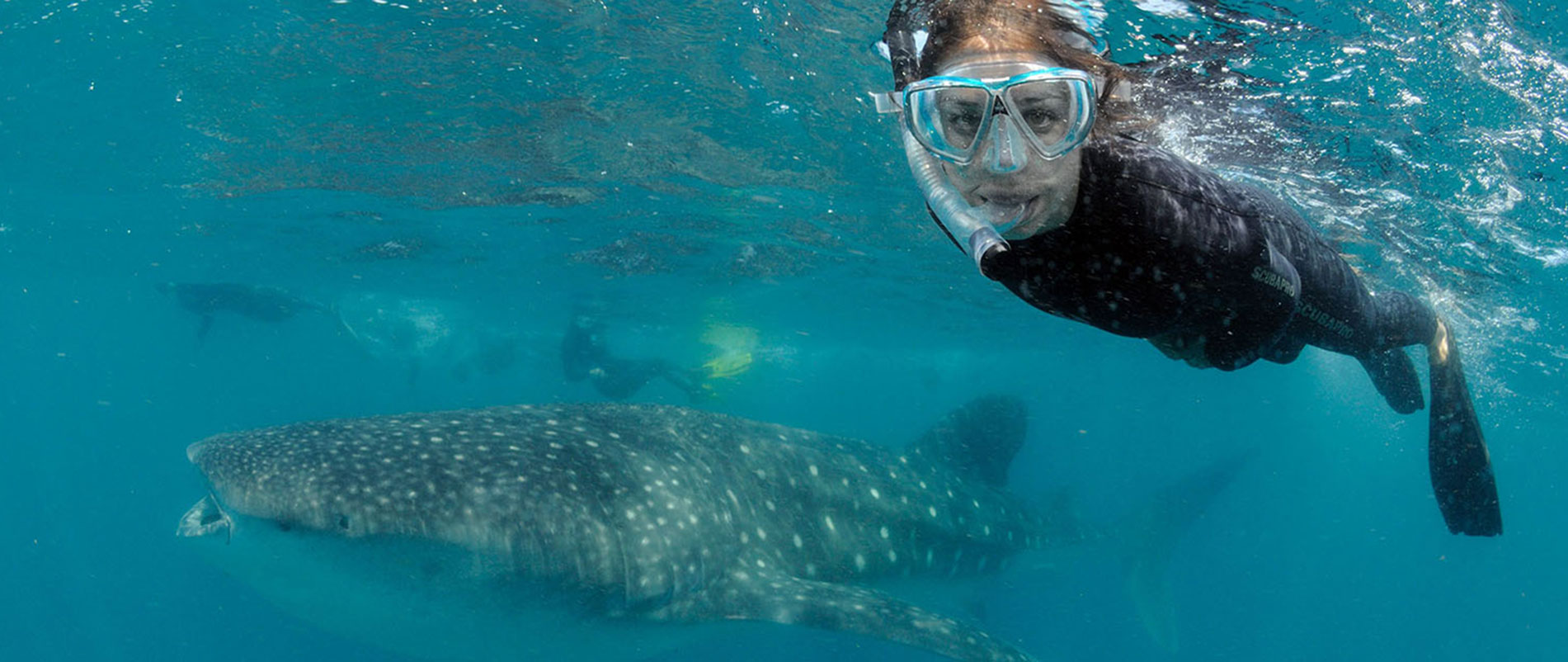
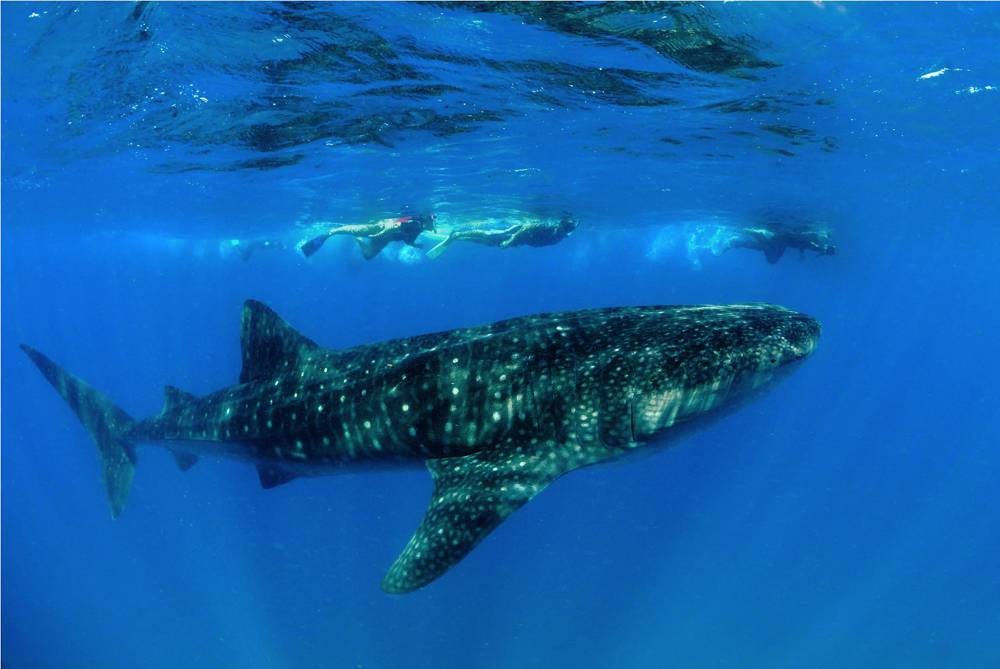
- Snorkelling with the world’s largest fish! whale sharks!
- Contributing to real conservation efforts
- Gain a PADI Open Water or Advanced Open Water Dive certificate
- Participate in actual field work as a citizen researcher on active conservation research!
Introduction
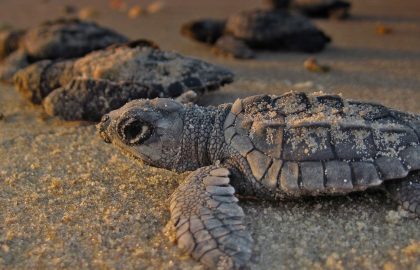
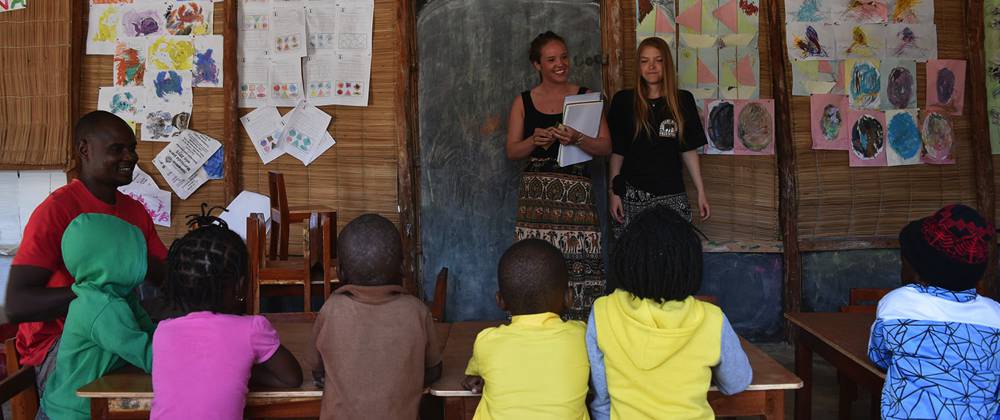
Mozambique is emerging as one of Africa’s rising stars after a long civil war which impeded its development. With a dynamic atmosphere, abundant markets and gorgeous coastline, Mozambique has witnessed economic growth since the end of the Civil War. However, poverty is still vastly prevalent and health and social factors such as low literacy rates, HIV/AIDS, bad sanitation and lack of access to clean water reflect in high poverty rates and low life expectancy. Mozambique, though one of the poorest and most underdeveloped countries in the world, boasts rich natural resources and sights. The gorgeous palm-fringed beaches offer unique dive sites and varied marine life exploration opportunities including spotting dolphins, whale sharks, turtles and humpback whales. Its ocean and natural resources are of great value and must be protected and conserved.
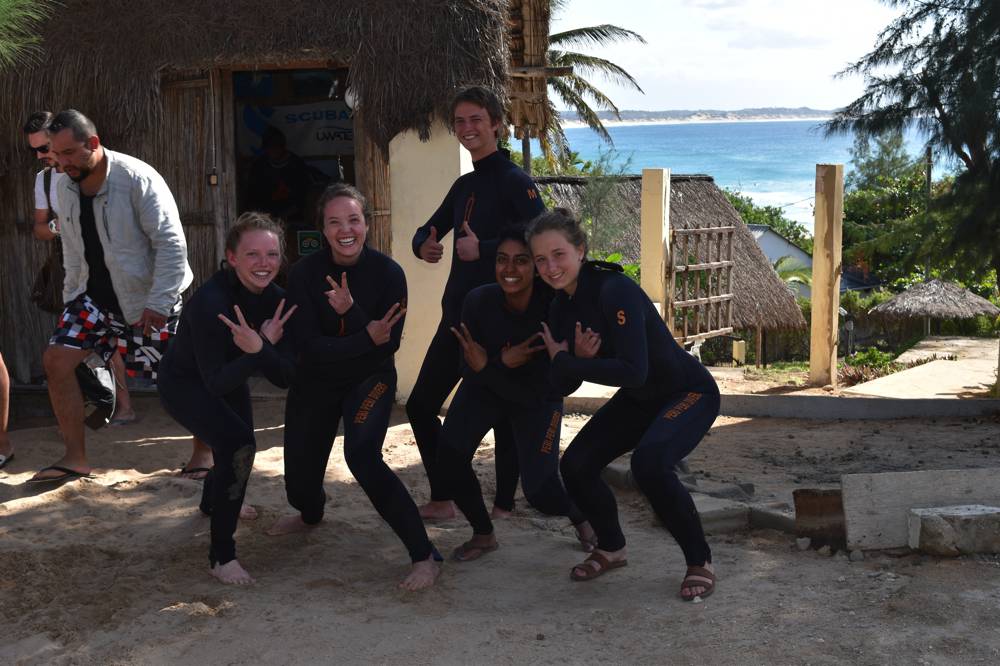
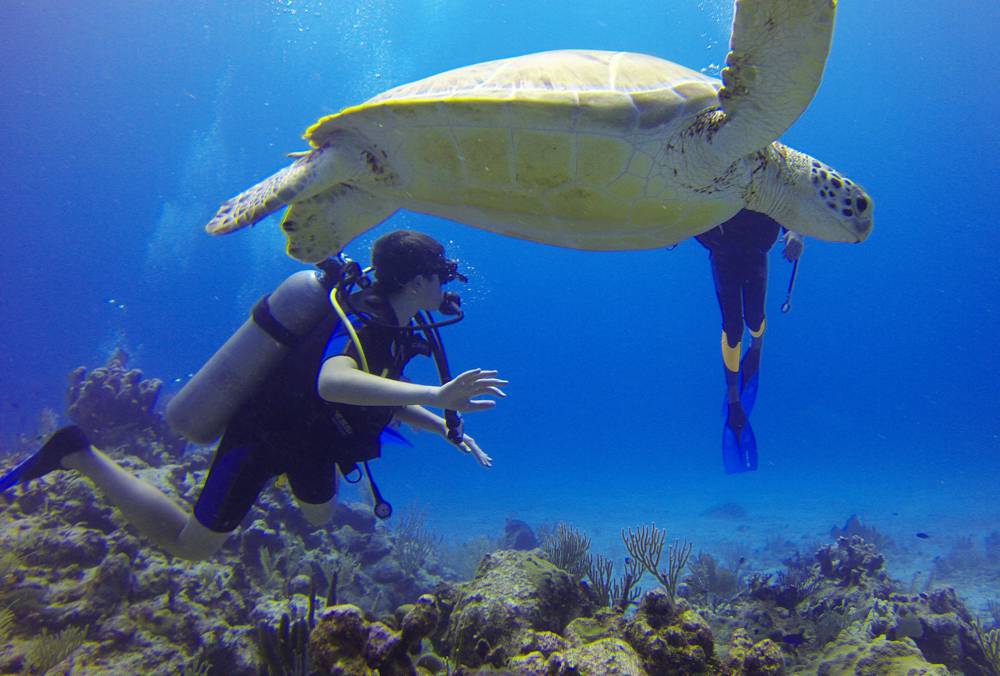
This project provides valuable hands-on research experience alongside our experienced staff in well-equipped research centres and access to unique ecosystems and wildlife. You will get the opportunity to carry out marine research and monitoring activities under the guidance of our co-ordinating project scientists. You will join other interns on the project to collect data via scuba dives, ocean safaris and beach walks off the Tofo coastline. You can look forward to excellent diving, snorkelling and beach experiences while gaining first-hand marine research skills and contributing to this worthwhile project.
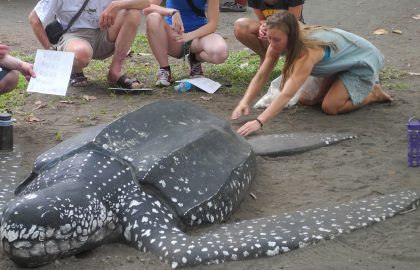
As a volunteer, you will have the opportunity to get involved in various research projects including monitoring whale shark numbers, behaviour and ecology and taking underwater photographs for Identifying individuals, monitoring the condition of the coral reefs and indicator species of reef fish, monitoring manta rays and other threatened marine species, surveying presence of microplastics on the beach with possibility of other studies too, as project focus can vary over time. You will be trained on how to take identification photographs of certain larger species like whale sharks and manta rays in order to assess and monitor their population. Depending on the time of year, you may be looking at various indicators of the health of the marine biodiversity such as surveying humpback whale numbers and the turtle nesting activity. Our coordinating project scientists will train you to assist with data collection, and you will gain insight into the work carried out here for scientific research and conservation. You can also help out with cleaning up beaches and other general environmental activities in addition to uploading and analysing data. Some of your time will be spent in the office on learning activities and on tasks such as recording sightings from dives and reviewing remote camera footage.
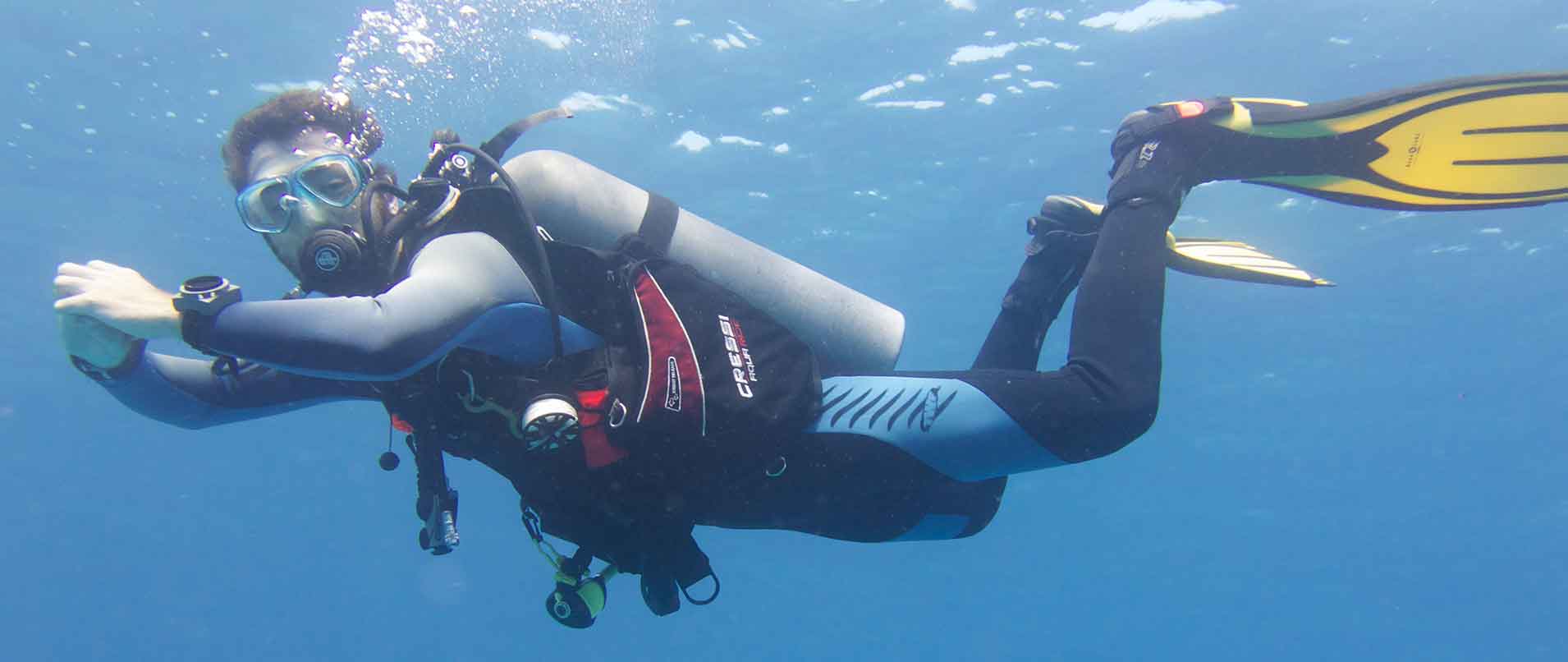
Many of the project activities require you to be able or be ready to learn how to scuba dive. In order to facilitate this, there is a diving course included in the cost of the program (not included in the two week option) which leads to an internationally recognized Open Water Diver or (for those already holding the OWD) Advanced Open Water Diver qualification. Also, you need to be capable to snorkel and to swim unassisted for 100 m. It would be an advantage if you can hold your breath while diving but it is not a requirement.
Extra Info.
This project involves conducting research and conservation activities with different species. Some are conducted at specific times of the year and other are conducted all year round. Our coordinating project scientists will accompany you on scuba dives and ocean safaris to assist with data collection.
Whale Shark (throughout the year)
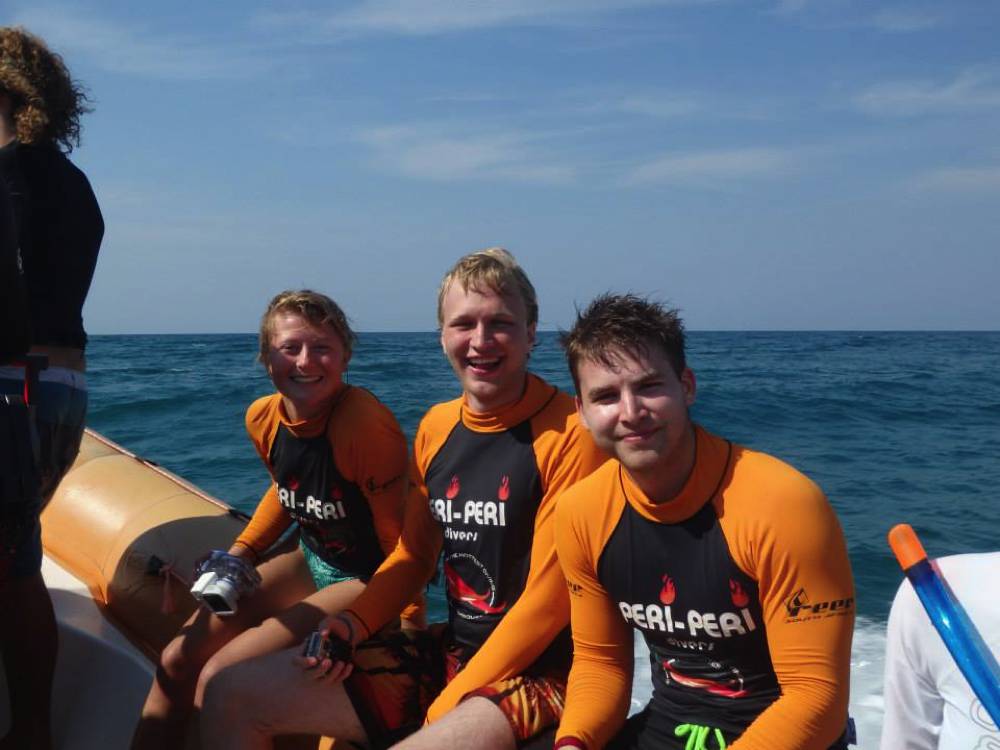
This part of the project involves joining ocean safaris to snorkel with whale sharks as well as taking underwater photographs for identifying whale sharks and recording ecological information. The types of information collected include date, GPS location, surface and underwater conditions, size, sex, distinctive features, behaviour of the whale sharks. The ID photographs help identify each whale shark and record re-sightings.
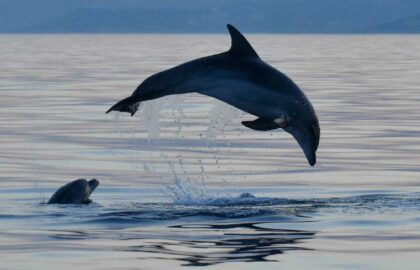
Dolphin (throughout the year)
You will be collecting data which allows the dolphin numbers and behaviour to be recorded and uploaded into databases shared with our Marine Partners. Dolphin behaviour is of particular interest as it relates to tourism.
Coral Reef and Fish (throughout the year)
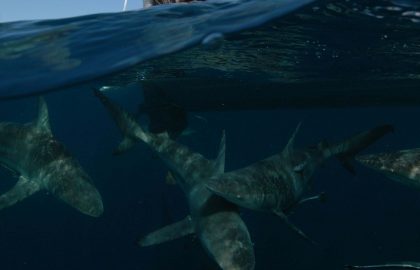
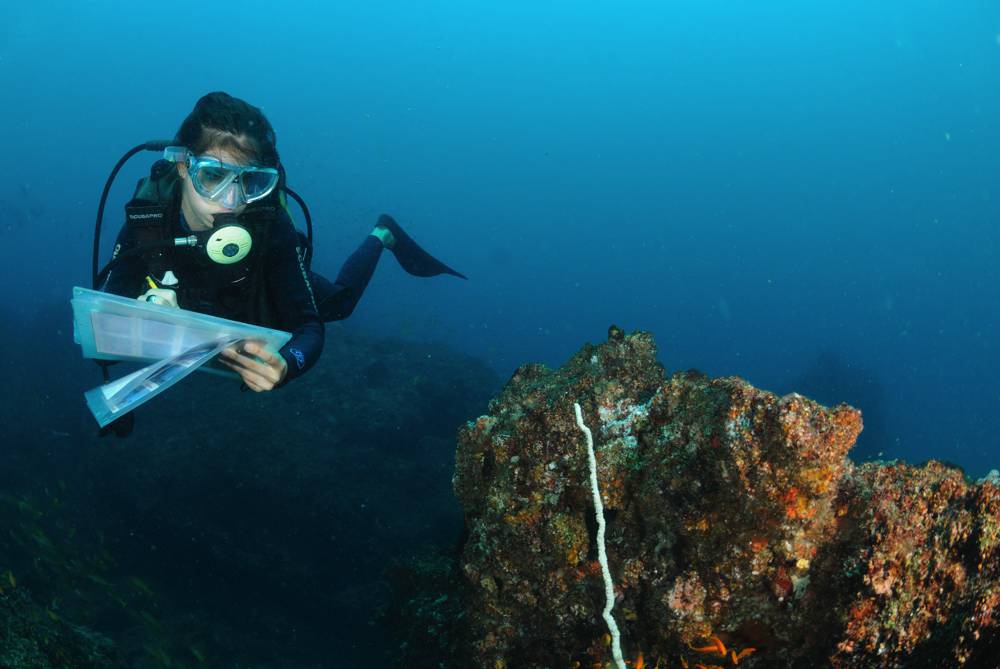
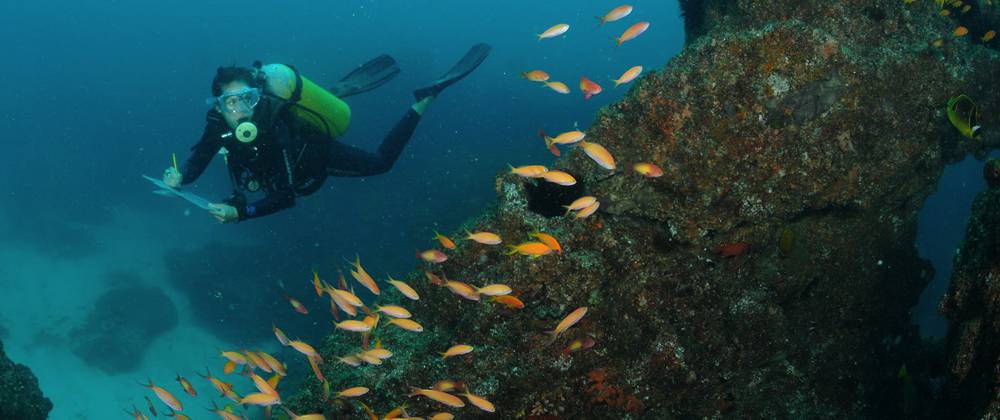
Coral reef monitoring involves joining scuba diving and carrying out underwater data collection about indicator species of coral fish and the condition of corals and echinoderms on the reefs. The research may involve recording indicator species of reef fish, collecting ID photos of megafauna including mantas, turtles and leopard sharks, collecting photos of nudibranches to help develop a species list for Mozambique.
Seahorses (throughout the year)
This part of the project involves traveling to the Inhambane estuary and snorkeling in relatively shallow waters in order to evaluate and monitor the seahorse population which includes counting seahorses, identifying the size of seahorses by taking photos, entering data into a database for analysis.
Humpback Whales (June – October)
You may help with monitoring the numbers of humpback whales during their seasonal migration. You will participate in sand dune based observations with binoculars, boat based observations to record the number of whales, observing their behaviour.
General environment/beach (throughout the year)
Research and clean-up activities include regular surveys of samples of sand from the beach
Office based and administration work (throughout the year)
Data collected during field work needs to be collated and uploaded to relevant computer databases on-site and online. The project contributes to various international databases where international contributors can access it and use for scientific journals and theses.
Additional information
• If you are taking Lariam/Mefloquine/Mephliam/Tropicure (or any other derivatives) as anti-malarial treatment (prophylaxis) you will not be permitted to dive, as it causes increased risks when diving. Please inform your doctor that you are going on a dive holiday, and request another suitable anti-malarial treatment.
• Accredited divers must bring their dive cards (listing their last logged dive) with them as proof.
• Dive accredited volunteers not requiring/wanting a dive course but who have not logged a dive within the last 6 months will need to complete a Scuba Review before they can participate in research dives. The cost of a Scuba Review is not included in the project cost, and a small fee will be paid locally for this directly to our partnering Dive Centre.
• The open water certificate qualifies volunteers to dive up to 18 meters, and some of the dive sites are between 20-30 meters deep. It is not required to dive at these deeper sites, but if you wish to participate in deep diving (up to 30 meters) you will either need to complete a Deep Dive course at a small additional cost, or you can choose to complete an Advanced Water Course at an additional cost.
• Ask for our fish-list if you would like a head start on understanding all the different species that you will be seeing on your dives!
Daily Life
You will be met at Inhambane Airport and transferred to your accommodation Day one is just for relaxing and settling in after your long journey, the beach is right in front of the lodge if you can’t wait to get in the water! Your second day will start with a presentation by the co-ordinating scientists which will prepare you for the project. On day two you will start your open water scuba diving course which will last between 4 and 7 days depending on the conditions. This is an internationally accredited course and upon completion you will get a certificate permitting you to scuba dive to 18 m anywhere in the world. If you already hold an Open Water Diver license, you will complete an advanced dive course (Advanced Open Water Diver) qualifying you to dive to 30 m, which will allow you to access the deeper dive sites and participate more fully in the research activities (this is also available as an optional extra for those who wish to progress after taking the initial qualification in their first week). After the course is completed you will focus on the project activities.
A lower price is available for those who are already dive certified and don’t require a dive course.
Three weeks is the minimum duration for this programme, unless you already have the Advanced Open Water Dive certificate, in which case a shorter option of two weeks is possible if you are limited on time. You will find you can contribute more if you stay longer, as it takes the best part of two weeks to learn what is required of you.
During the first week of the programme you will have the opportunity to listen to interesting educational talks on the fascinating mega fauna with which you will be swimming over the next few weeks including how to identify different kinds of fish species.
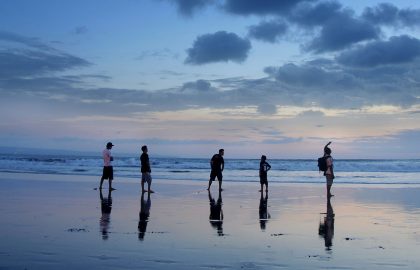
On days 6-7 and all other weekends, you will have the time to explore the stunning palm-fringed beaches of Tofo – you can relax, swim, surf and enjoy the area. During the first weekend you may also need to complete your dive course depending how fast you progress.
Once your dive course is completed you will officially be an assistant scientist! On days 8-12 and all other weekdays you will participate in the project activities which typically include four or five ocean activities per week, usually three or four dives and one ocean safari, looking for whale sharks from the boat with snorkel kit and underwater camera on hand for when you spot them.
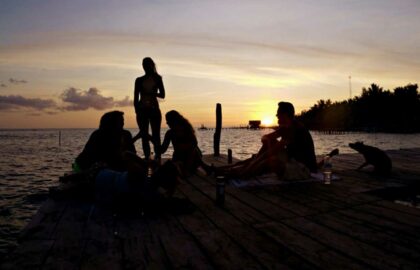
You can start your day with the sunshine and a good breakfast! Afterwards, on a typical day you are likely to be on the water in the morning and will start early with preparations for your research dive – get your equipment together, have a briefing before departure and head to one of the dive sites to conduct research including fish and manta ray surveys. Or you may be heading out on an ocean safari and go searching for whale sharks and dolphins to photo ID and record their behavioural data. Other activities include beach cleans, microplastic surveys, spotting humpback whales from the shore (in season). At around 12:30 you will take a lunch break with lunch served at the dive centre restaurant. After lunch will have more scheduled activities possibly office work such as entering data into the database from the research work you did in the morning, or whatever activity is scheduled for you by the project coordinator. Typically the work day ends around 15:30. You can then return to the accommodation to share your experiences with the other volunteers and perhaps go for a swim in the ocean, relax on the beach or check out the local market. A delicious dinner and time to relax will await you.
If you have signed up for a 2 week option, then day 15 will be your day to leave the lodge and transfer to Imhambane Airport to fly home. Our team will take care of your airport transfer if you leave on your designated day.
If you have chosen a 2 week plus option, you will continue on your project as described for days 8-12 and enjoy Mozambique a little longer!
Travel & Accom.
During your experience you will be staying at a beautiful Lodge just a few steps away from the spectacular Tofo Beach and a short walk from the project’s office and the dive centre. The accommodation is dorm style (with bunk beds) in chalets with traditional thatched roofs, open living areas and ample room to relax outside. They sleep 8 people in bunks with mattresses, mosquito nets, sheets and pillows provided. Each bunk for two is in it’s own curtained cubicle. There is electricity and running water. The toilets and showers are shared. There are communal living spaces outdoors and a swimming pool with a bar selling drinks and snacks.
The Lodge is a short walk away from Tofo village where you can find a market, some shops, restaurants and bars. Inhambane, the nearest town, is an hour away with public transport.
While on the project, you will enjoy three meals a day at the Lodge or dive centre. For breakfast there is fruit, toast and spreads, coffee or tea. Lunch and dinner will be a simple meal of something like pasta, chilli and rice, a local dish such as feijoada, baked potato and beans or similar. The meals are local and fresh and will be part of your cultural experience. Vegetarian diets and most food allergies can be taken into consideration although there is a supplement payable for provision of gluten free diet.
Requirements
- Minimum age 18
- Minimum 2 week (qualified divers only) or 3 week commitment
- Be able to communicate in English
- Be open minded, patient, adaptable and willing to embrace the challenges of the project
- Have a positive attitude towards living in a rural setting and working in a team
- Good mental and physical health – an appropriate level of fitness
- Necessary flights & visas
- Full travel & medical insurance – full assistance will be providing in arranging everything should you choose our Placement Support Package
Costs
| Non-qualified | Qualified Divers | |
|---|---|---|
| 2 weeks | NA | £1,622 |
| 3 weeks | £235+ | £2,141 |
| 4 weeks | £235+ | £2,590 |
| 5 weeks | £235+ | £3,081 |
| 6 weeks | £235+ | £3,618 |
| 7 weeks | £235+ | £4,110 |
| 8 weeks | £235+ | £4,341 |
| 9 weeks | £235+ | £4,795 |
| 10 weeks | £235+ | £5,294 |
| 11 weeks | £235+ | £5748 |
| 12 weeks | £235+ | £6,248 |
* Currency conversions are approximate.
** All payments incur a 5% bank transfer fee.
*** Places are confirmed with a 15% deposit
What’s Included:
Project Fee includes food, accommodation, airport pickup, orientation, in-country support and project activities.
If you are already a qualified diver, let us know so that you can qualify for the lower rate.
What’s not included:
Flights, insurance, visas (if applicable) and vaccinations. Full assistance will be provided in getting all these arranged if you choose our Premium Support.
Premium Support Upgrade
We understand there’s a great deal to plan and organise for your trip. When booking a Placement, many of our participants choose to purchase our Premium Support Upgrade to benefit from the expertise, knowledge and experience of our Project Coordinators.
We can provide the personal advice you need to ensure your trip is organised with excellence and planned with efficiency; ensuring the very best experience possible. Read more about how we can help you.
Mozambique
Note: Map coordinates are approximate
Past Participants Say