“Arriving at the Belize airport it still didn’t hit me that I was in a different country, until I saw the immigrations line. There were three lines that were moving as fast as a turtle. The only thing to keep us cool was a large fan in the back of the lines. That was an experience in itself. Finally getting through that line came another line at customs, which was much quicker. I got a charter plane instead of the bus because a four hour bumpy ride to Sarteneja was not going to settle well with my stomach. I finally saw my plane fly in and it was smaller than the plane I jumped out of when I skydived. The pilot was super nice and told me some things about the sights that I was seeing. I could not have been able to experience any of that if I didn’t get the charter. When we landed on a gravel land strip with nothing around it but Paul and Zoe’s car we said goodbye to the pilot and headed into town.
 The town was very small and very different than any town I have ever seen. The roads are gravel with many bumps and all of the houses had their doors open and windows covered for a breeze and shade. No one has air conditioning. The houses were very small and had a lot of character. The people in the town rode mostly on bikes or walked, the gas was at someone’s house in their backyard and Paul filled up a tank for the house so we could have a warm lunch. We then started to head down a very bumpy road surrounded by forest to go to the project. After about two miles we finally reached my new home. I walked in and everyone was very welcoming but seemed exhausted, little did I know that they went to an Easter party the night before and didn’t get in until late. Everyone introduced themselves and then Kate, one of my roommates, brought me to out little cabana. When you walk out the back door of the main house all you see if palm trees and the prettiest bluest water you can ever imagine. We are located right on the lagoon. When we got to our cabana, a small little hut with a bamboo ceiling and one room for living and one bathroom, she told me where I would sleep and put my things. Then we sat and she explained everything to me about what works and what the schedules are and basically everything that I will be doing. It all sounded amazing to me, anything to do with animals sounds amazing to me. We then went back to the main house and had lunch, prepared by Zoe, with all of the other volunteers. Her cooking is amazing! Later they showed me what I will be doing with the manatees, feeding, getting grass, and swimming. There are two males named duke and Ramses and one small female named kalesea. After a few days they gave me an orientation of the whole facility showing me all of the monkeys, manatees, and cats. The place seemed so big that I would think I would get lost if I were to be left somewhere. But when you get to know where things are it seems a little less big.
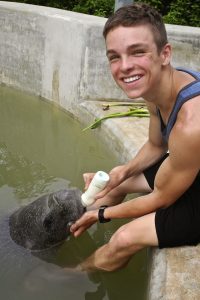
Making through my fist night sleep in my cabana under the mosquito net I felt so relaxed like I was on an island. ( which I kind of am) I started to train with all of the jobs that I am put on. Swimming with the boy manatees is fun, Ramses always greets you because he either thinks its time to eat, or time for the new leaves that we give him, or a swim. I get my little tube on and swim around with him. Duke sometimes follows , at a distance, he’s not very social he has had a rough life. Feeding a manatee, that is bigger than you, a bottle is a very strange but amazing feeling. Cupping his chin with my hand, having his flippers grab ahold of my leg, and hearing him make the piggiest sounds is the best feeling! That is how we are feeding Ramses, Duke on the other hand is a little bit trickier. Since his prior injuries didn’t allow him to be bottle fed or eat grass, so every other day we have to make a human chain and lure him into a sling so we can gently catch him to tube feed him. It is a difficult and long process, but it is all worth it in the end knowing that he will have a full belly.
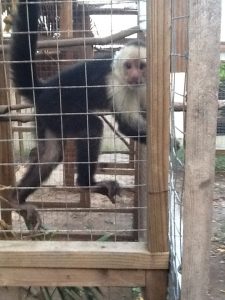
When I started getting the hang of all of the duties for the manatees they decided to introduce me to one of the long term monkeys that needs a lot of loving. Nikki is a capuchin that was taken away from someone who had her illegally in Belize as a pet. Since there are no capuchins in Belize they cannot release her. She is full of energy and is in need of a bigger space, which they are working on with all of the other projects they have going on.
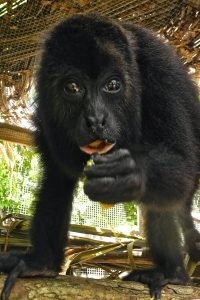
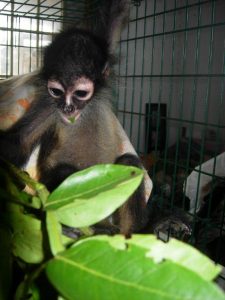 The monkey people needed some help distributing the food so I asked to help and they brought me along to help feed some of the spider monkeys. They are all very beautiful, but there is one that has stolen my heart. They call him a ladies man and it is very true. Charlie is his name, he is a spider monkey and when I went to feed him I stayed cautious of him because I didn’t know him, but he reached out to me and the girls said that I could touch him and go closer to the cage. Once I did he wrapped his arms around me and was making a whole bunch of creepy old man noises. It was really cute and funny. They then told me to make a monkey noise back to him and blow on his neck and he loved it! That made my entire day and I will never forget that moment.
When swimming with baby Khaleesi we have noodles that hold us up so we can float and she can swim under us. The point of swimming with the manatees is to keep them active and to give them company. I had my knees bent slightly and my feet crossed when I was floating and she went right at the back of my knees to suck on them. Where manatees get milk from their mother is in the armpit, under their flippers. So for her to look for milk in any crevices in my body is normal. This time she was very hungry so she was really trying to suck my legs and started pushing me around the pool. Ever so often she would come up for a breath of air and look at me with those little manatee eyes! She would then swim underneath me and put her nose in between my legs, still trying to find milk, but we don’t feed her that way. When we feed her we scoop her up in a sheet, make sure she’s straight and that she can breath. Then two of us hold her up so she is floating straight in the water another one of us bottle feeds her. I have only been holding her but I can’t wait to bottle feed her! They say that she stares into your eyes when she is eating and she does have the cutest face.
Today when I went to go feed, clean and spend time with Nikki she was good but a little rough as usual. After I left they told me that Matt cut a tree down for her. I was a little hesitant because Nikki can be a little much at times but I brought it to her anyways. After shoving it through the small door to her pen I opened the double door and she was so excited! She jumped on my head and then back inside so I can move it in there. When I fit it in and was tying it up she was so gentle with me, on my shoulder, on my head, on my arm, just so excited she had something new. She was jumping from branch to branch through the trees leaves. When I kneeled down to tie the bottom she jumped on my leg and layed down, kind of saying thanks, it was sooooo cute! After that moment I knew that I am doing all of this for a reason. Later when I go to spend time with her, since she knows me better she has calmed down a lot. Living here is like a working paradise, you get to see so much wildlife and a totally different culture while you care for amazing manatees, monkeys, and some other animals.
I can’t thank Global Nomadic enough for helping me with everything leading up to my internship and during.
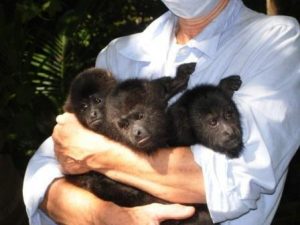 After being here for 3 weeks, I am starting to really get the hang of things. You always have to be cautious because these are wild animals and they can be very unpredictable. All the work I do here is worth it, for the animals and myself. I am learning so much about the limits that I have for myself and how I can set my mind to really push myself even farther than I’ve imagined. Once you get a basic routine down you start to get creative to keep the animals, mostly the monkeys, interested and entertained. Seeing how they grow and how these animals start connecting with you gives you a feeling that you cannot describe. One thing that I wish I could have done better before I came here was to talk to someone who has done this before so I could get tips on what to do and where to go and what to bring. So I give Global Nomadic permission to give my email to anyone who is signing up for this and have so many questions like I did. I also suggest if you are staying only for a month or 6 weeks or so to allow travel time for yourself either before or after your trip because it is beautiful here and so much to see and do. Also here is a list of ideas for what to bring…
Water shoes ( if you don’t like the feel of the lagoon bottom), waterproof watch, clothes you do not care about and might donate after you leave, light long pants and wind breaker jacket (to keep Mosquitos away), good flip flops or sandals that Velcro and stay on your feet, at least 2 to 4 bathing suits, mosquito net ( if they don’t have one), string for making bracelets, puzzle game book (we love that here), books ( maybe donate to the library), gopro or underwater or regular camera (if you have one), water bottle, journal (you will want to remember these moments), small snacks and peanut butter (you will get hungry since your working so hard), extra cash ( good to have handy), quick dry towel, smartphone or iPad or laptop, aloe Vera (for your burns), rain jacket (it’s either sunny or rainy), bring shorts and pants that are quick to dry (you’ll thank me), the dogs here would appreciate treats, and maybe bring a float to float in the lagoon (nice to relax in).
I hope whoever picks this trip has an amazing time like I did, make time to have at least one vacation while you are here to see the Mayan ruins, San Pedro, Caye Caulker, blue hole, hol chan, and so much more! You won’t be upset if you choose to come here! One of the best experiences in my life and the most amazing people that I’ve ever met! (:”
Primate Research & Rehabilitation Internship in Belize

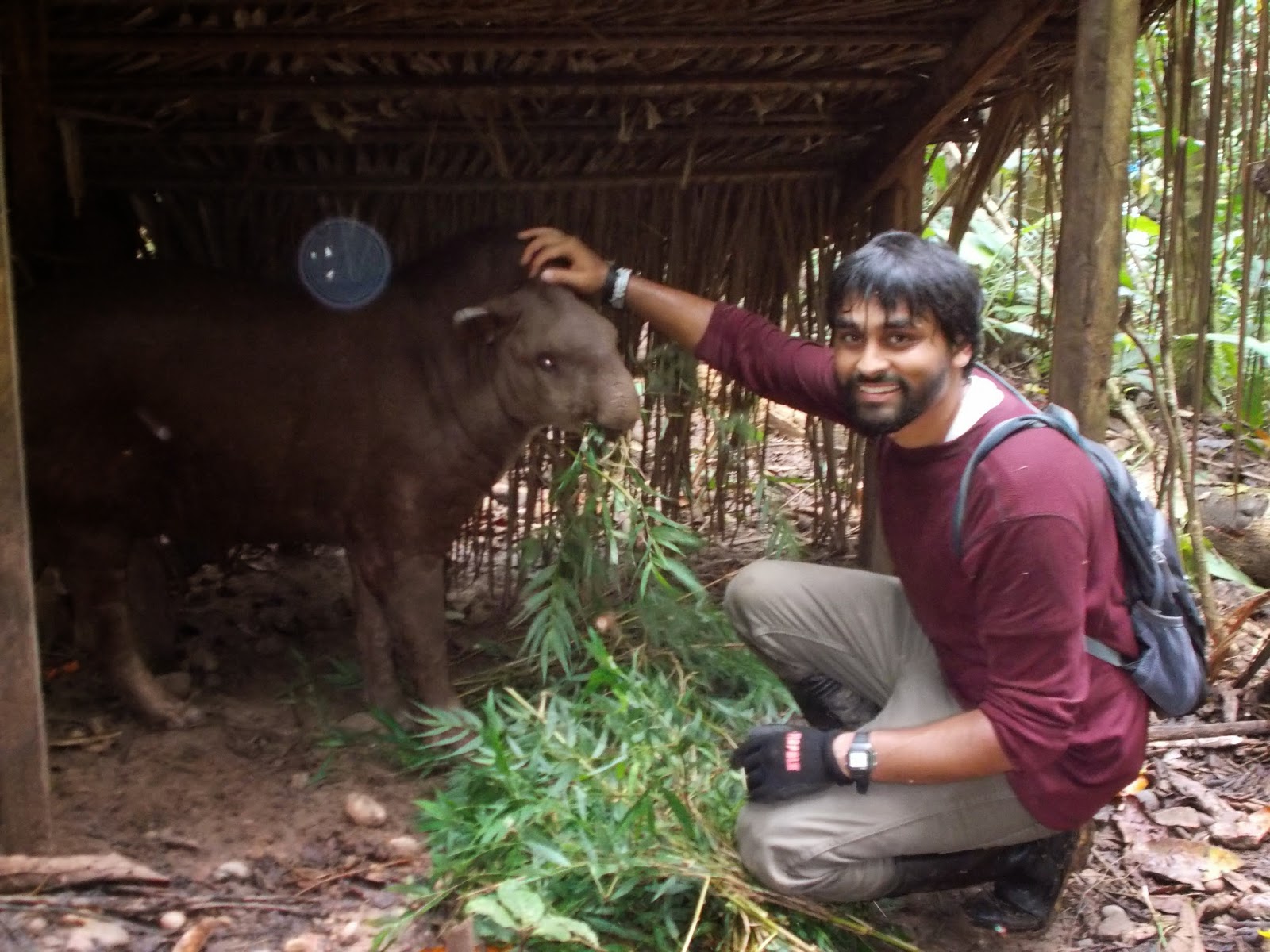
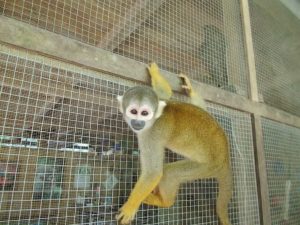 The most difficult part of Esperanza Verde for me was getting to the site. After getting to Pucallpa (the closest major city), you take a two hour taxi ride to the town of Curimana. This is where the volunteers can use the internet (very slow) and make international phone calls. When you get to Curimana, you get dropped off at the port and cross the river to the other side. From there it’s another 45 minute taxi ride to Bello Horizonte. From there, you have to get someone to cross you again to the other side of the river to get to Esperanza Verde. I also spoke very little Spanish before I left. This made it a little more difficult to communicate with taxi drivers. However, you should not have much trouble getting there if your Spanish is OK.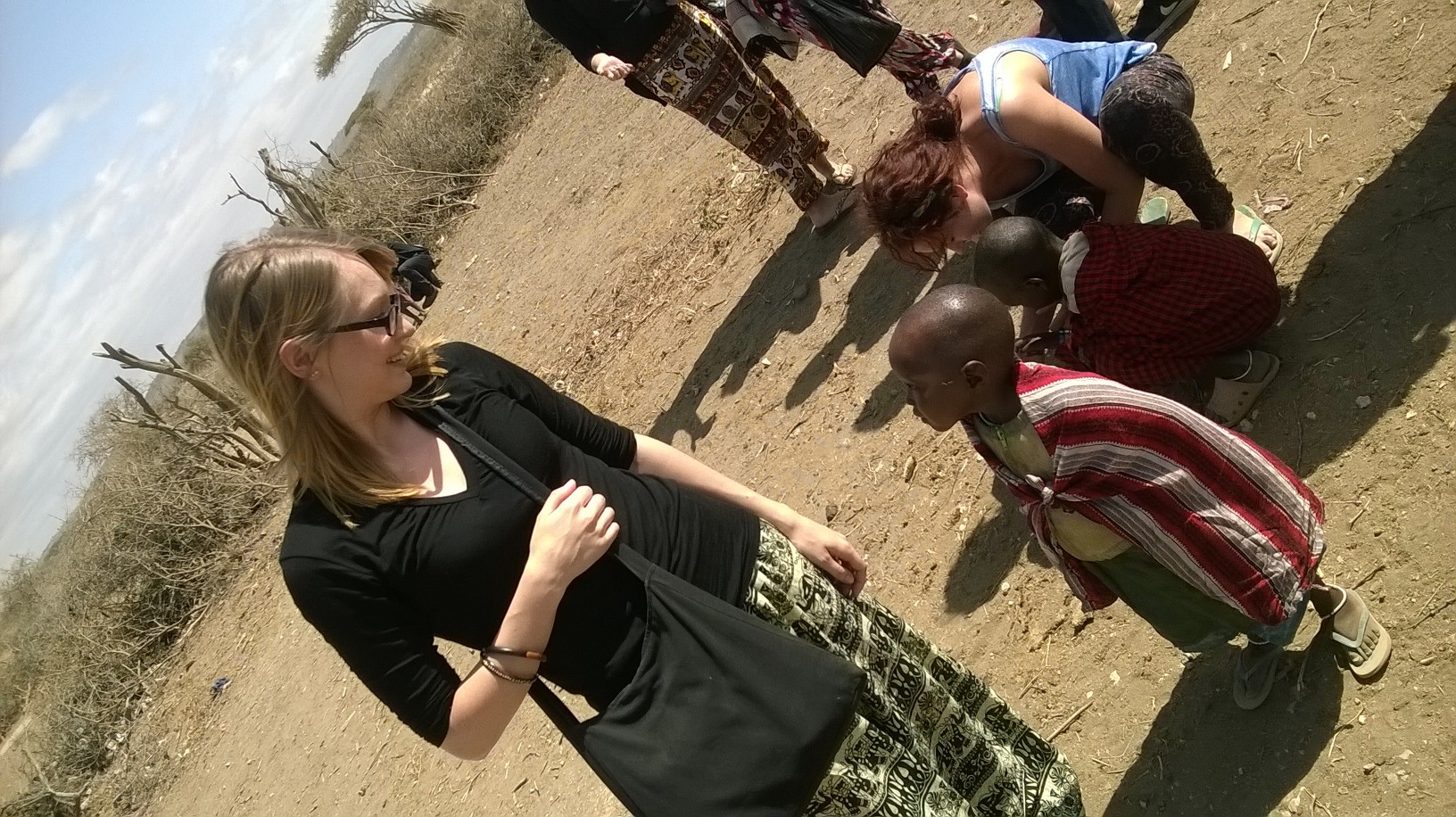
 in our office provide information and advice, and where possible invite the other party to come and discuss the situation in the office hoping to settle the matter instead of going to court. Most issues are to do with inheritance or divorce. It is a common belief here that women do not hav
 e the right to own property and that their only purpose is to be wives and mothers. That is why women often experience problems when their husband or parent dies – even where they have the right to inherit the property of the deceased, their distant male relatives take it for themselves, leaving the women with absolutely nothing. Quite often women also seek advice concerning divorce, as it is very difficult to get a divorce here. The law lists a few specific reasons that are reasonable grounds for a divorce, such as violence, and even then you need clear evidence, such as doctor’s reports, to prove your case. Realising that you are no longer in love with your spouse is definitely not a good enough reason for getting a divorce! Quite different from Europe, where it is actually very easy to get divorced these days…
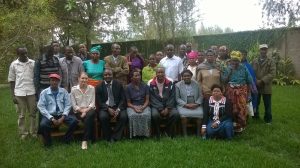 As well as working in the office, we also organise human rights workshops in remote villages where people are not aware of their rights and duties. The most important step is education. Women cannot defend themselves if they are not aware of their rights, and men cannot be expected to suddenly start treating women right if they don’t know the difference between right and wrong. But you know what they say – old habits die hard. It will probably take a very long time before things change in the larger scale. (And, of course, the biggest problem of all is corruption, which i’m not going to get into right now.) However, little by little we are hoping to change the way people think, even is it is just one person at a time. “Pole pole”, as they say in Swahili.”

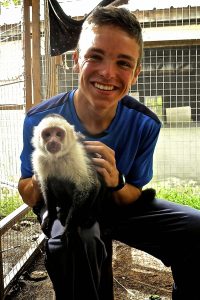 Nikki the capuchin was the first monkey I met while at the project. That little monkey has more personality than half the people I’ve ever met. She was confiscated while she was being smuggled across the Belize border. Because capuchins are not native to Belize, she cannot be released. As a sanctuary animal she receives lots of attention and play time with the volunteers. Nikki is high energy; she loves to jump on you and bite when she gets excited. She requires a lot of patience. However, the relationship that formed between Nikki and I was amazing. She became quite affectionate and loved to groom me and be groomed in return. She was a blast to build a relationship with.
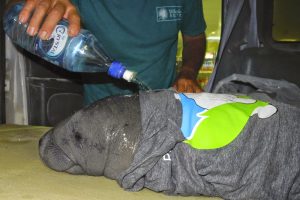
 struggled to breathe. His outlook was grim. However, after many days of 24-hour watches to support him in the pool and some love and care, the little boy improved. He earned the name Mitch. Sharing my name with this little baby is magical. Being a part of his initial rescue and rehabilitation was one of the most memorable experience of my trip.
 I also formed some amazing bonds with the other volunteers. It was really neat to be surrounded by people who have a similar passion for animals and wildlife. We were all there for the animals. I got to meet and become really good friends with people I never would have met otherwise, people from all over the world. I was not prepared for how close I would get to the other volunteers. I’m definitely staying in contact with many of them.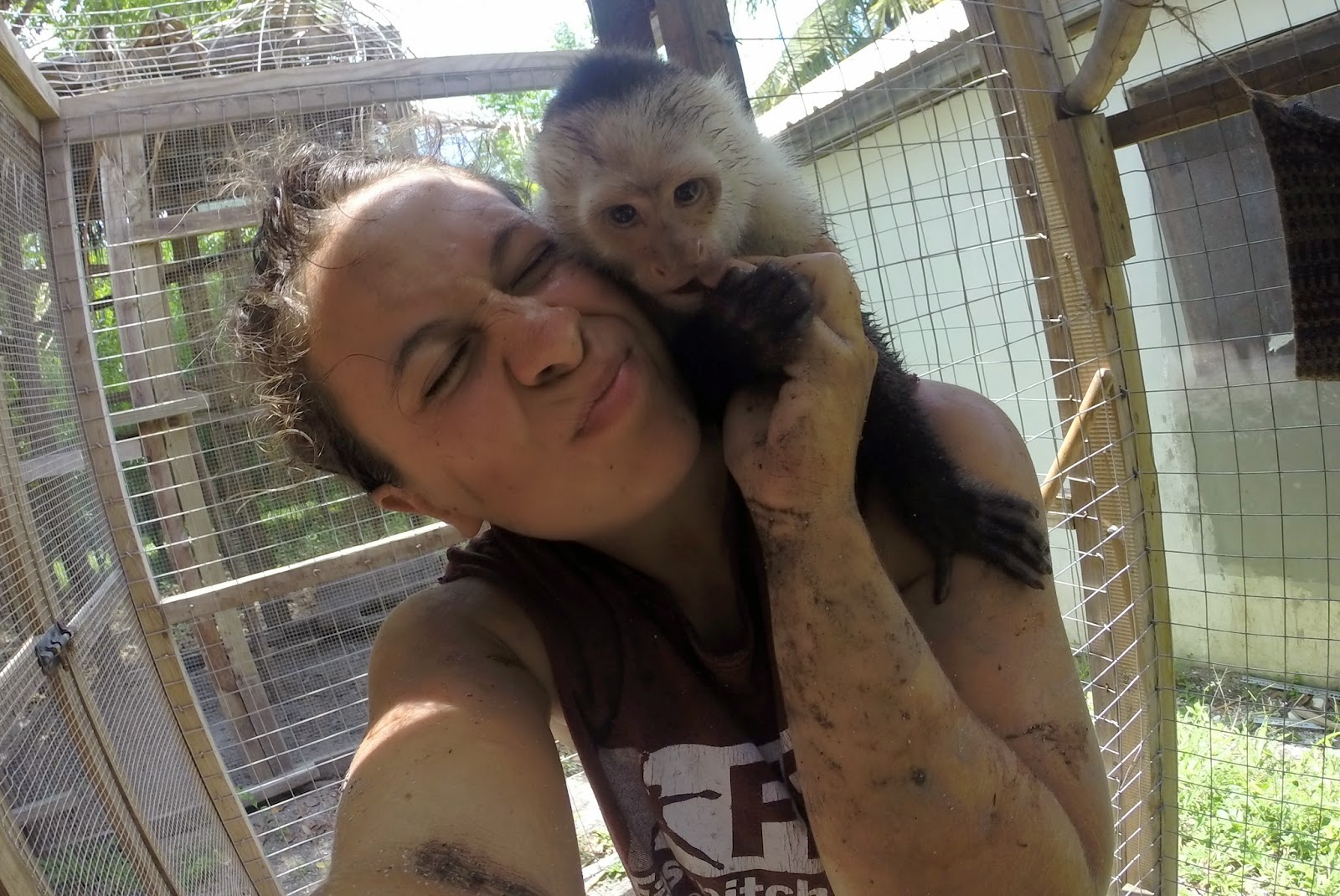
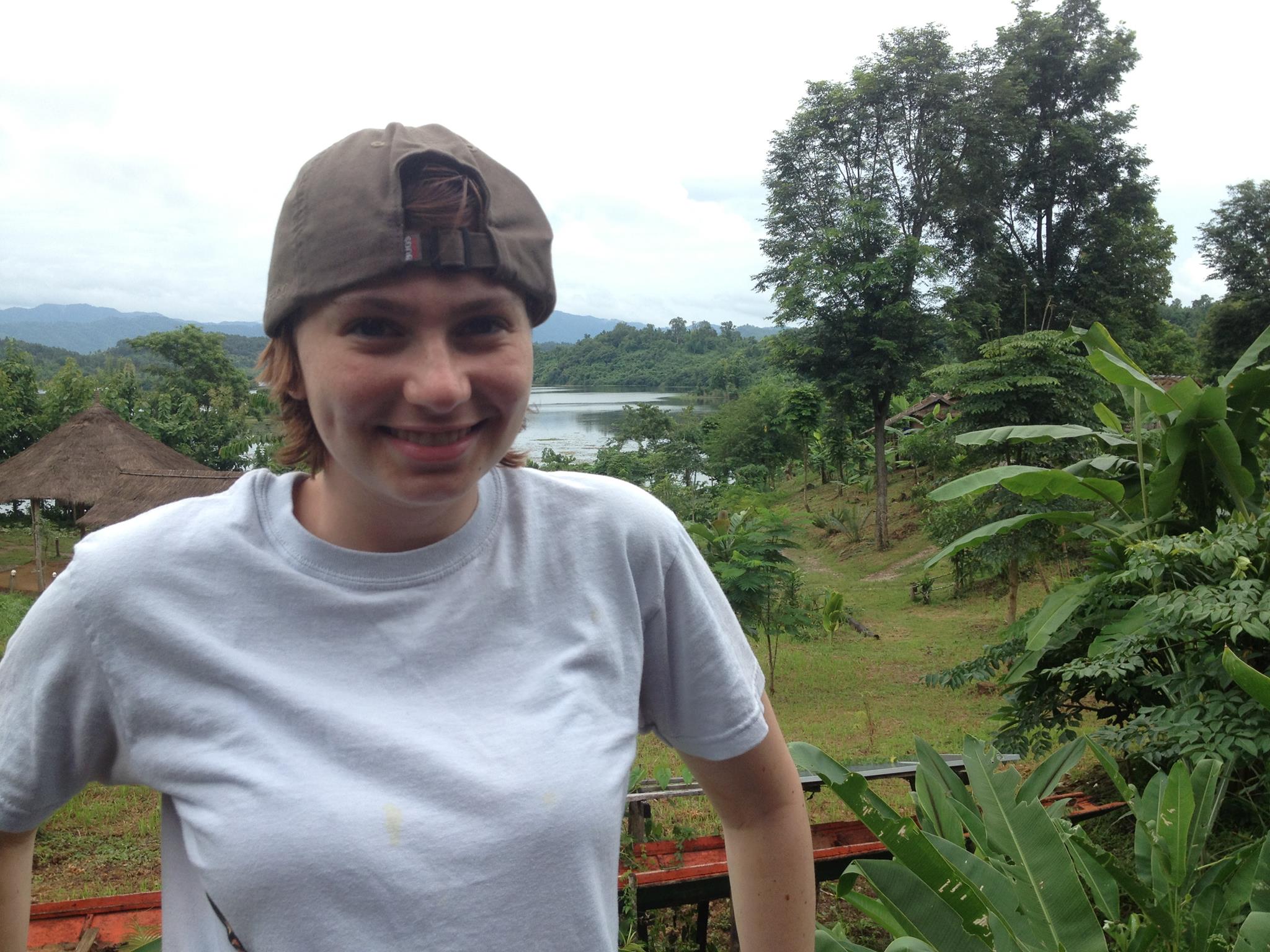
 Eventually, I came upon an internship that really interested me. It was a trip to Laos, a land locked county between Thailand and Vietnam, and an opportunity to work with Asian elephants. The process of booking the trip through Global Nomadic made it a breeze, they even help book my flights. The site itself also prepared me for what I should expect with an itinerary, sleeping arrangements, and even what to bring. The only thing I had to do was get on the plane. Global Nomadic made this trip so easy and honestly, it was an experience I will never forget.”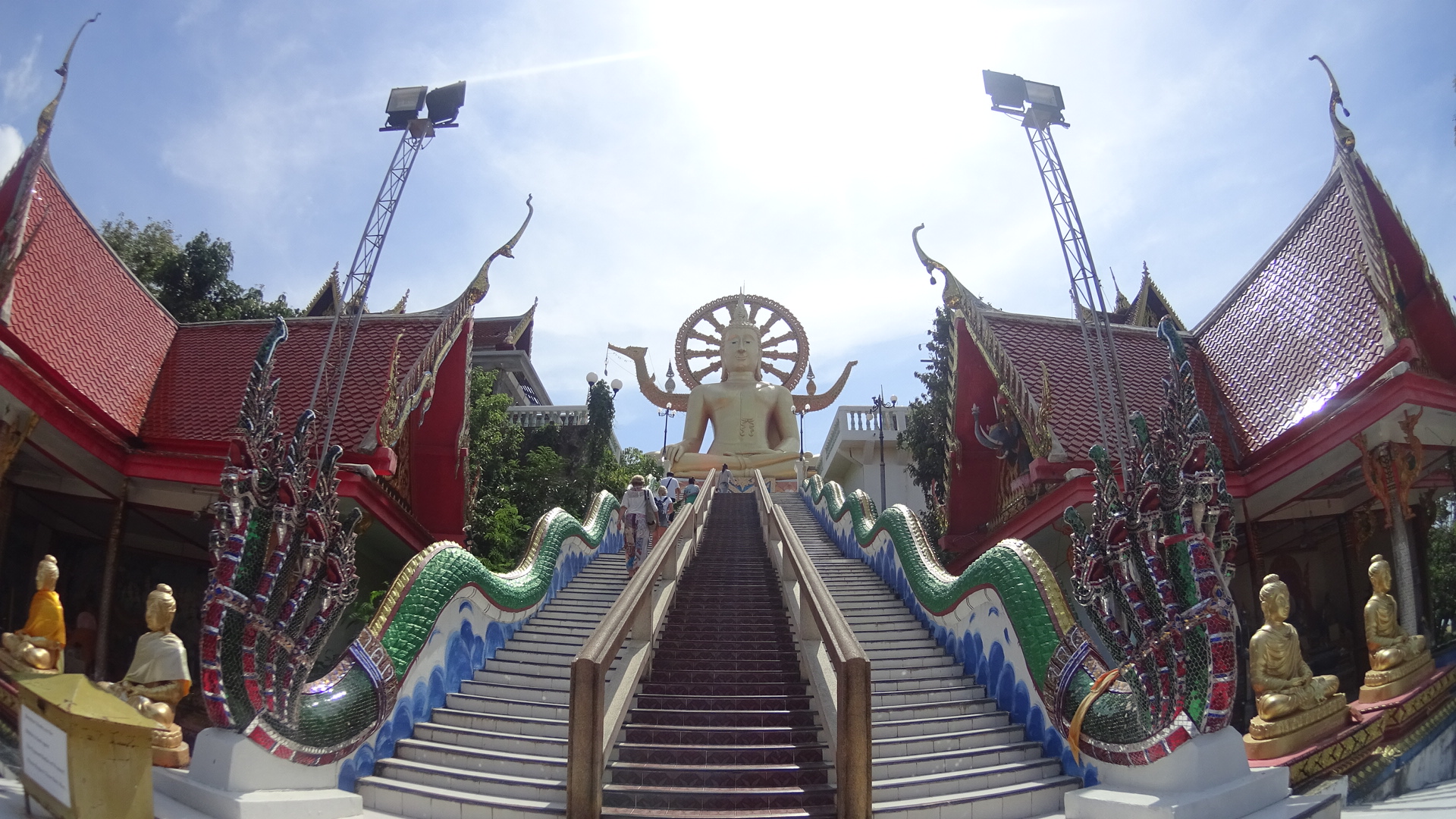
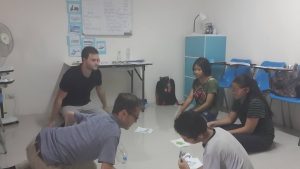 This led me to look into doing a TEFL course in Thailand. I was then looking through my emails one day and noticed an advertisement on ‘Student Beans’ for a competition to win a TEFL course. I thought, why not? It involved uploading a picture onto the Global Nomadic Facebook page and the winner was the person with the most likes. I didn’t expect to win but after a long month of the competition running, I was informed I’d won! I couldn’t believe it. Jeremy then contacted me congratulating myself and put me in contact with Rosanne who took care of the rest of the placement details. It was all handled brilliantly from both ends and I was finally going to be able to do a TEFL course in Thailand. I was then told it was on Koh Samui where I’d be doing the course, and having visited that island before, I was extremely happy to find that I’d be doing a month’s training there.
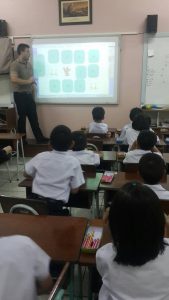 that goes into each and every lesson and helps set you up for the wide world of teaching English. Luckily, I got along with the course mates which made for a pleasant and fun environment where everyone worked as a team to get things done. One of the most enjoyable parts of the course was getting real life, hands-on experience of teaching school children between the ages of 7 and 15. We also got an insight into teaching adults either working at a resort/hotel or a international language school as a teaching assistant.
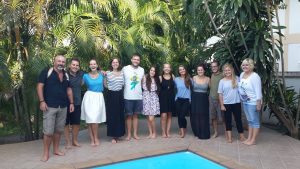 The course is on the beautiful island of Koh Samui and so when you have your weekends free to explore, you’ll not be short of things to do! I took a boat trip to the Angthong National Park which comprises of 42 islands and is an incredible place. There are also a lot of activities and landmarks to see on the island such as Big Buddha and the waterfalls in the centre of the island.