Sunday May 29th: Arrival
“The flight was uneventful with not much of a view. As far as I could see there was only vast stretches of ocean. It began to look more like a magnified snapshot of blue canvas than water. I 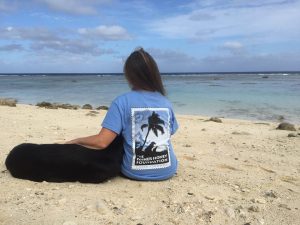 felt very small.
The island appeared very unexpectedly and the pilot turned to prepare for landing. It was absolutely beautiful. Towards the center of the island jutted three peaks, which tapered down into magnificent forests. The beaches were surrounded by gleaming turquoise water which ringed the whole island.
We exited the plane directly onto the tarmac. The weather was lovely, slightly humid and only about 80 degrees. The weather has stayed fairly constant, with a few sprinkles of rain here and there. It’s hot during the day, but as long as there’s a breeze coming off the ocean it’s quite nice out.
I got through customs without incident. Jo, the foundation manager, picked me up with one of the other volunteers, Melissa. A lot of people here drive interesting little trucks. The front looks identical to a large white van with two seats. They have a low bed only about a foot high. Jo drives in the front while we all ride in the bed. I often see people travelling around the island like this.
The clinic is quite different than I expected. The front door (which is on the side of the building) opens into the kitchen. We’ve got a full kitchen with stove, oven, sink, and microwave. West of the kitchen is our dining room/office. The shower and bathroom are right off of the dining room. There’s a living room to the north which the three bedrooms come off of. I’ve got a bedroom all to myself. Outside, there’s a separate building with a consult room, two storage rooms, a food room where we prepare meals, and the surgery. The dog run is right behind the surgery, and the backyard is lined with pens & crates for our various patients. Some of the healthier dogs are allowed to be chained up outside so they can roam more freely.
There are four volunteers here currently. Myself, Melissa, Katherine, and Angela. Melissa is a pre-Veterinary student from the U.S. she’s been very kind and helpful, answering my many questions and making sure I know where everything is. Angela is a second year Veterinary student as Washington State University. Katherine, who we call Cat, is a Veterinary Nurse. She knows so much more than any of the rest of us. We rely on her a lot to help us diagnose and treat the animals. We don’t have a vet right now, so we have to do most everything on our own. We can’t perform any surgery or prescribe heavy medications, so we’re doing our best to keep them comfortable until we get a new Veterinarian. I’ve heard that there might be one coming on Wednesday.
For dinner, we went out to the Sunday market in Muri. The food there is amazing and generally cheap. There’s a good mixture of tourists and locals. The lo
cals will often dance and put on a small show. It’s very fun. Melissa tells me it’s tradition for the volunteers to eat there every Sunday night. I think I’ll rather enjoy this tradition.
I haven’t seen any patients yet other than the house animals. Mamma is the house dog. She’s very old and very sweet. She sleeps most of the day, but still keeps all of us in check. Alan, Jo’s dog, is very sociable. He often jumps up on the couch with us to be pet and tracks sand all over the house. We’ve also got three house cats; Moustache, Judy, and Terry. Moustache is very sweet, and often comes in during meal time to hang out and receive scratches. Terry likes to hang out in the food room on top of the fridge. Judy spends most days at the neighbour’s house, but comes back at night I’m very excited to get out and see patients tomorrow. I can’t wait to get started.
Monday May 30th: Day 1
This morning we had a weekly meeting and Jo walked me through where everything was, what the different jobs and assignments entailed, and my duties for the day. Jo confirmed that a Veterinarian would be arriving Tuesday night and would start working Wednesday morning.
At 8:00AM every morning, we begin feed and cleans. This usually takes about an hour or so. We check on all of the animals and note any significant changes. We clean out everyone’s kennel and give them the proper food. Once we’ve finished with all of that, one of us will walk the stray or lost dogs (the one’s that aren’t injured or sick). After that, people usually start coming in for consultations or to purchase supplies and treatments.
At 4:00PM, we begin feed and cleans again. The clinic officially closes at 5:00PM, but one of us will be on-call in case of emergency and sometimes people will come in afterwards.This morning during feed and cleans, the neighbour across the street informed us that a stray dog had been hiding behind his shed since the night before.I grabbed a leash and walked over with him to coax it out. The dog was a young male puppy, and he’s one of the most beautiful little (actually not so little)things. The dogs on the island are their own breed,everyone here just calls them Raro dogs. The puppy reminds me of a German Shephard/Lab mix, butt here’s something else in there that I can’t quite put my finger on. He was very scared, but extremely friendly. Once he warmed up to me he was very excited. I brought him back over to the clinic and we set him up out in one of the dog houses. He was very healthy, looked well-fed, and had a collar on so we think he’s lost instead of stray. He’s also been trained somewhat. He’ll sit when asked and when I took him for a walk that evening, he was phenomenal. He stayed right on my hip the whole time. The rest of the day was pretty uneventful. I can’t do much since I’m not qualified and we don’t have a Veterinarian to observe. I mostly cleaned.
Tuesday May 31st: Day 2
This morning and afternoon was pretty much the same as yesterday. We did feed and cleans in the morning, a few consults for flea treatment, and feed and cleans in the evening. I’m being eaten alive by mosquitos. They seem to be impervious to bug spray after it’s been on for 30 minutes. I’m so glad I’ve brought a mosquito net for my bed.
Tonight was quite the adventure. I had started making dinner at about 6:00PM when we got a call that a dog had been struck by a car on the other side of the island. Cameron, the SPCA volunteer who hangs out with us a lot, took Melissa and raced over to pick it up while the rest of us scrambled to get everything ready we thought we might need. Cameron and Melissa got back about 40 minutes later with the dog. It was a puppy, only about 5 months old though he was still fairly large, probably about 15 kilos. He was in shock so we rushed him into surgery, laid him on the table, hooked him up to an IV, and began administering oxygen. There wasn’t anything else we could do for it without Veterinary supervision. Cameron and Melissa ate and then ran over to the hospital to develop the X-Rays. I swapped places with Kat, and then Angela so they could take turns eating. I monitored and recorded the dog’s heart rate, breathing rate, capillary refill, mucous membrane color, breath sounds, and temperature every ten minutes. When Cameron and Melissa got back with the X-Rays at 7:30PM, it wasn’t good. The dog had a fractured left hind leg and there was fluid buildup in the abdomen. We used an IV tube to measure the swelling of the abdomen. It was growing about 1 cm every half hour. We knew it was a pretty hopeless situation. By now, Jo had arrived and we were trying to do everything we could to keep the dog alive for another 2 hours until the Veterinarian’s plane landed at 10:00PM. Jo had called the owners and informed them of the situation. Cameron switched me places and I went inside to help Jo get ahold of the airline. We tried to contact the airport and get permission for the Veterinarian to skip the line and get fast-tracked through Customs. I was frantically flipping through airline paperwork looking for a 24 hour hotline phone number when Kat ran in and asked for CPR protocol. The dog had passed away. Kat and Cameron performed CPR until the owners arrived, but there was nothing left to be done. When they’d lifted the dog up to open it’s airway, blood had poured out of him until the drain of the surgical table overflowed onto the floor. The owners took him home. He was the first dog I’ve treated personally that’s died. It was sad, but I’m glad the dog was no longer suffering.
Thursday June 2nd: Day 4
A dog came in today with fish poisoning. When dogs eat fish that come off the reef, they lose weight very rapidly and lose muscular function. They are essentially paralyzed. The dog was a female with 4 puppies. Luckily, the puppies are already 6 weeks old, no longer nursing, and sleep through the night. One of them has already been claimed by the neighbours, hopefully the other puppies will go fast.
I consulted today for a dog that had a growth on its hind leg. Chris suspects it’s a benign tumor and I’ve scheduled it for removal on Saturday. I’m learning really fast to be efficient in filling out forms and completing reception work. Sometimes I have a hard time understanding the locals over the phone. They have very thick accents. I suppose they have the same problem with me.
Friday June 3rd: Day 5
We got 7 more puppies today. The mother has died and the owner is not able to take care of them. They’re about 3 1/2 weeks old and need a lot of care. I’ve volunteered to take care of
them.
I finally got to observe surgery today! I got to watch an amputation. The leg had fractured through the joint and would not heal properly. It was really exciting! I learned a lot about dissection, tying off blood vessels, suture techniques, and anesthesiology. After Richard got the leg off, he handed me a scalpel and let Angela and I dissect it to find the fracture. Whenever I cut through a nerve, the toes of the severed leg would twitch and flex.
We went out to market tonight. It was the 30th anniversary of market day and they had a huge celebration. There’s a booth therethat makes ice cream from fruit right in front of you. It was so good. Local bands were performing while people danced. It was a welcome break from scrubbing kennels and running back and forth between the admissions book and the consultation room.
Saturday June 4th: Day 6
I think I got about 2 hours of sleep last night. I normally like taking care of puppies and kittens, even young ones, but having to take care of 7 at once is extremely taxing. None of them seem to get hungry at the same time. As soon as I finish with 2 or 3 of them, I’ll get about 5 minutes in bed before another one starts crying. 1 of them insists on wrestling all night with his siblings. He’s constantly growling and chewing on tails. I finally pulled him out and stuck him in a box by himself just to get him to shut up. I’ve managed to make it through the day, but I’m on-call tonight which means I’ll have the puppies again.
I got to observe the tumor removal today. It was really interesting to watch the vet dissect it out. It was a perfect sphere, and Richard taught me a suture technique called Simple continuous sub cuticular suture that leaves all the sutures beneath the skin, so you don’t have any visible knots. He said that it’s good to use this suture in tropical climates to prevent the attraction of insects to the wound. I’m learning a lot.
I’ve got a nice set of teeth marks across my hand from a dog this evening! I can’t blame the poor dog. She came in with a swollen belly. We thought she might be pregnant, but x-ray showed that her abdomen was filled with fluid. We drained 3 liters out of the poor animal. She’s very nice now, she’s one of the most well-behaved dogs at the clinic.
Tuesday June 7th, Day 9
Well, we no longer have a Veterinarian. Richard and Chris have gone back to New Zealand, and the new Vet we were supposed to get last week has never arrived. Apparently
his flight was cancelled due to bad weather and he hasn’t rescheduled a new flight. I don’t think he’ll be coming.
A dog came in this morning that had be hit by a car. It had road rash across its face and its right hind leg was badly lacerated and broken. Since we don’t have a vet, Angela and Kat got to stitch him up. They did a fabulous job and Angela taught me when to use the different kinds of sutures. It was great experience for us.
- The last puppy hasn’t been doing so well. It was the runt of the litter and hasn’t gotten as much food as the others. I’ve been keeping a close eye on it and today we discovered it has some sort of ring worm. It’s too young to treat, we have no idea how it’s gotten it. I don’t know what we’re going to do with it.
Today we went down to watch a plane land. They have a jet blast zone at the end of the runway. As the plane came it, it was wobbling quite a bit in the wind and was very low. By the time it was about 15 meters away, we were staring straight at the nose of the plane. At the last moment the pilot pulled up and went around for a second go at it. It was very exciting. They made a perfect landing the second time.
Sunday June 12th, Day 14
We’ve gotten a 2 week old kitten that was found stuck in a drain pipe. It needs feeding every 3 hours. Barbara and I have been rotating feeding session with the puppy and kitten so we each only need to do it every 6 hours.
Tuesday June 14th, Day 16
Tuesday nights, we traditionally go to the Tumunu bar for the local dart tournament. I’ve never really played darts before until last week, but my partner and I made it to the final! We lost by 4 points and I got a fancy medal since I made it to the final and I’m a foreigner. The owner of the bar is a good friend of Jo’s and he gave all of us black pearls while we were there. I’m hoping I can find somewhere on the island that I can get it made into a necklace without blowing my budget (which so far, I am under).
Wednesday June 15th, Day 17
Not much happened today. It’s been pretty slow without a vet around. I started taking a scuba diving course which has been extremely fun.
We did have a cat, Mikaela, come in that had been bitten by a dog. The wounds were minor, the dog was probably playing and got too rough rather than maliciously attacking the cat. We did however, discover that the cat was actually a male. They’d gotten the cat as a very young kitten when it was hard for the Vet to identify the gender. So Mikaela has now become Mikael.
Saturday June 18th, Day 20
Jackie, the owner of one of the dogs we’re currently treating, runs the boat shop in town. Today, she sent us on one of her speed boats with a group of tourists. It was amazing! I don’t know what the boat is actually called. It’s like a banana boat where you have a seat that you straddle (much like riding a horse), but it was an actual boat, not an inflatable towed behind a boat. We zipped around the reef, jumped waves, and learned about the local folklore surrounding black rock.
Black rock is the remnants of a landslide that came all the way down the mountain and into the ocean. It is the islanders belief that black rock is the point at which the souls of the dead exit this world and make their
way into the afterlife. According to legend, every full moon, the souls of the lost and dead follow the setting sun from the center of the island towards black rock, which they then jump off as an exit from this world. No one will build along this spiritual highway. Also during a full moon, cars on the road will stop just outside the boundaries of black rock as the sun sets to allow the spirits to pass undisturbed. The traffic jam clears as soon as the sun sets and people go on their merry way.
Sunday June 19th, Day 21
Today we had a bit of a lazy day. Sundays we usually close at noon but hang around the house in case of emergencies. Today after we closed, Jo took us to the hidden garden where we got a fabulous lunch and wandered around. It was really beautiful, and the food was amazing! I got a salad that was a mixture of shredded coconut, lettuce, diced pineapple, banana slices, and chicken. I haven’t had a meal here on the island yet that I didn’t like! There’s so much fresh fruit and everything is seasoned to perfection.
After lunch, we went to Manui resort, one of the luxurious hotels on the island that allows Esther Honey Volunteers free use of their pool. The view was extraordinary and we got to swim/tan as the waves crashed in the background. It was very relaxing.
Thursday June 23rd, Day 25
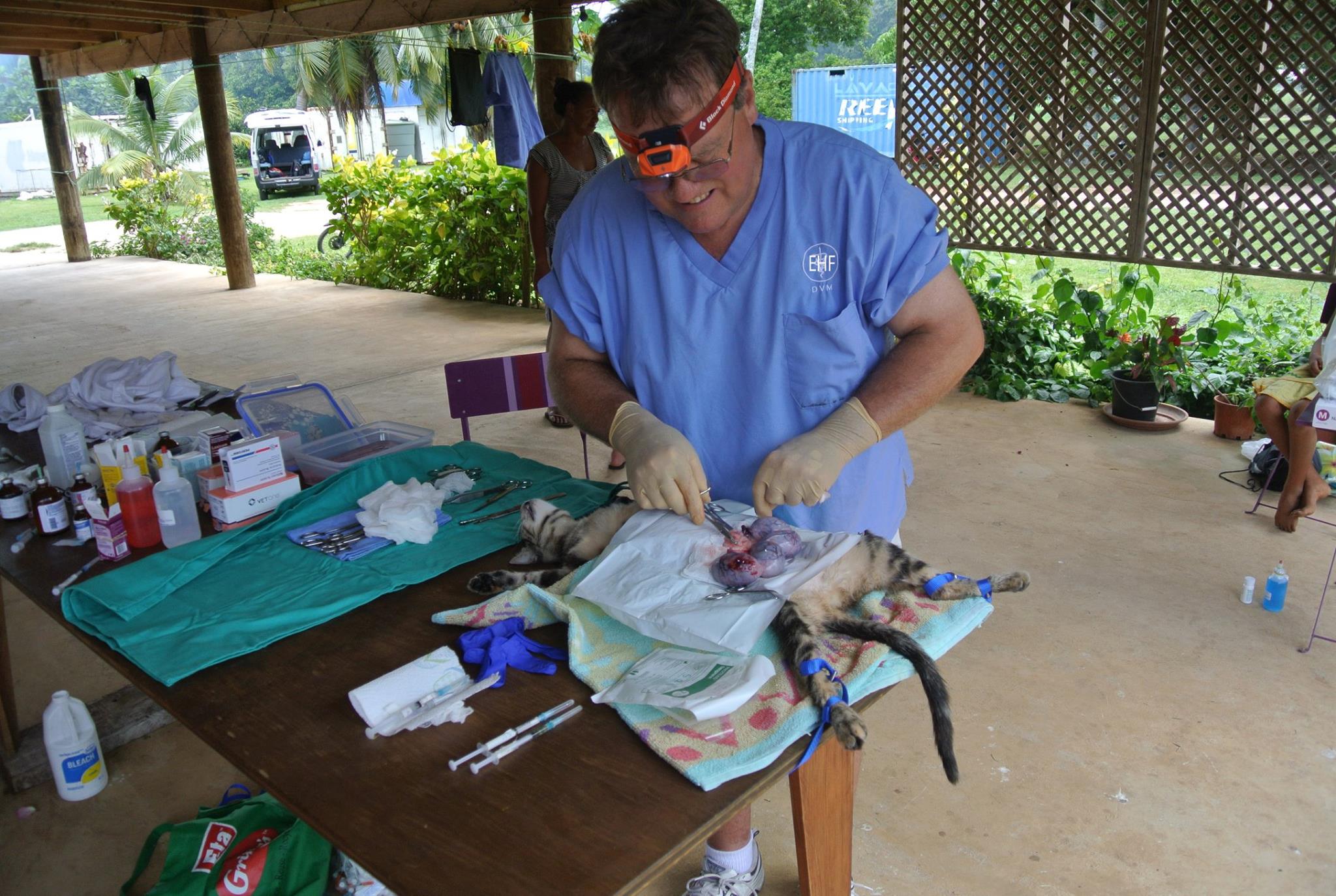
We had a lot of consults today. A dog came in that had a cataract in its left eye, we got several cats in for desexing, a lost puppy and a cat with perhaps the largest abscess I’ve ever seen. The owners brought it in worried that it was being lethargic and grumpy. It had a huge mass on its side near the hip with a red hole in the center, most likely the result of a cat fight. The owners were the funniest people I’ve met here; two lovely men who insisted that even though there were a lot of cats who fought around their house, there was no way their precious little girl would have gotten involved in a fight. Well, I could definitely understand why the cat was grumpy, Holly, the new vet, cut into it and about a pint of pus and blood came flooding out. The owners had also asked if while their cat was anesthetized we could de-sex her. Well, it turns out that their precious little girl was actually a castrated male. Boy were they surprised.
We had a bit of fun tonight. We went to Ti Vara Nui Resort for dinner and a show. It was spectacular! The food was absolutely amazing; an all you could eat buffet of the best local dishes. The show was mainly dancing, drums, and fire twirling to songs that told the story of the early Rarotongan people. Afterwards, they had another all you could eat dessert bar which was fantastic! There was so much fresh fruit I didn’t know what to try first. It was the best meal I’ve had since I’ve been on the island.”
Veterinary Internship in the Cook Islands

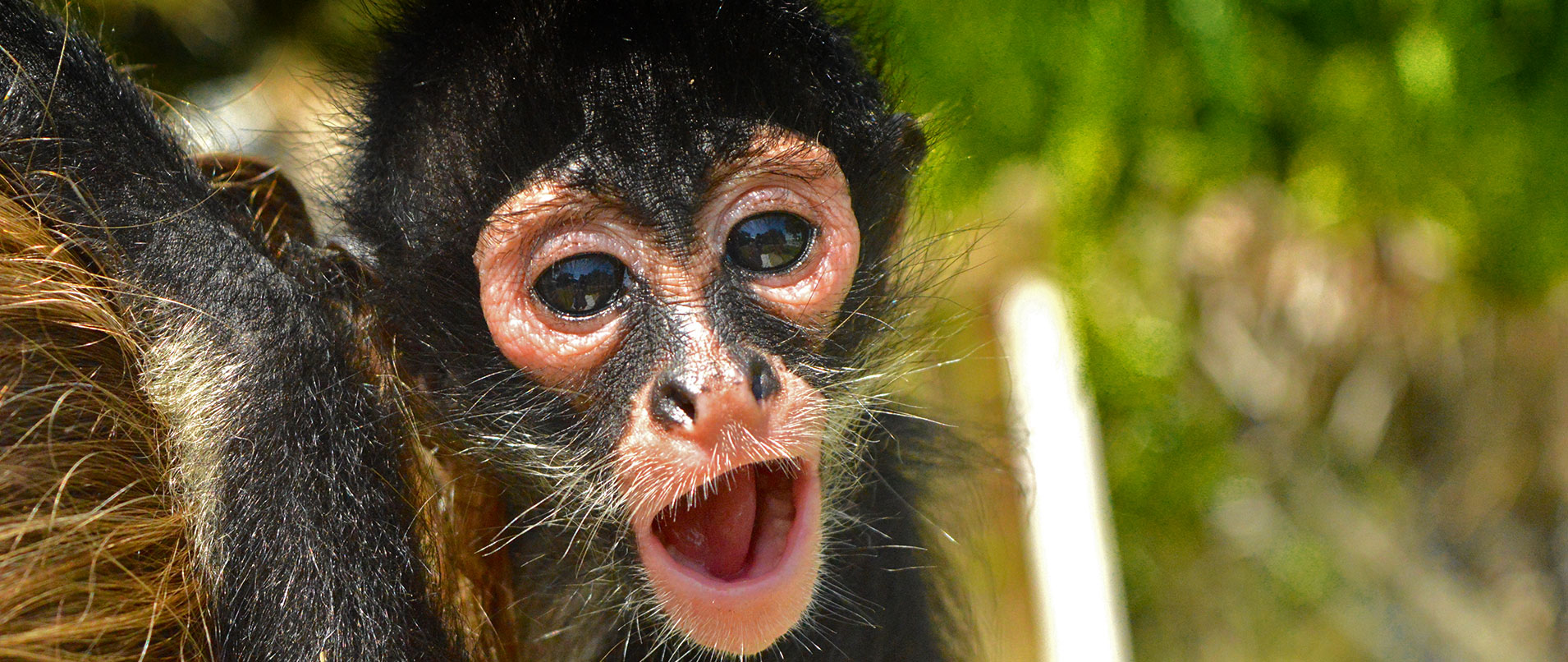
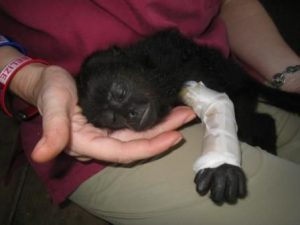 The early morning rooster alarm was my indicator of a completely new and exciting day. The monkey feed where the first on the to-do-list, where chopping fruits became part of the norm. While chopping fruit everyone would engage in conversation from our night into town, to the new insect we discovered in our cabana. The only difficult question I had to ask myself was “what monkey do I want to feed”? Ramses the Manatee was the next to feed; it was always a pleasure to jump in his pool, and give him a belly rub. Swimming with him and Duke (another manatee) where my forms of daily exercise; not to mention lifting Ramses which seemed like 200-300lbs, in and out of Dukes pool for interaction.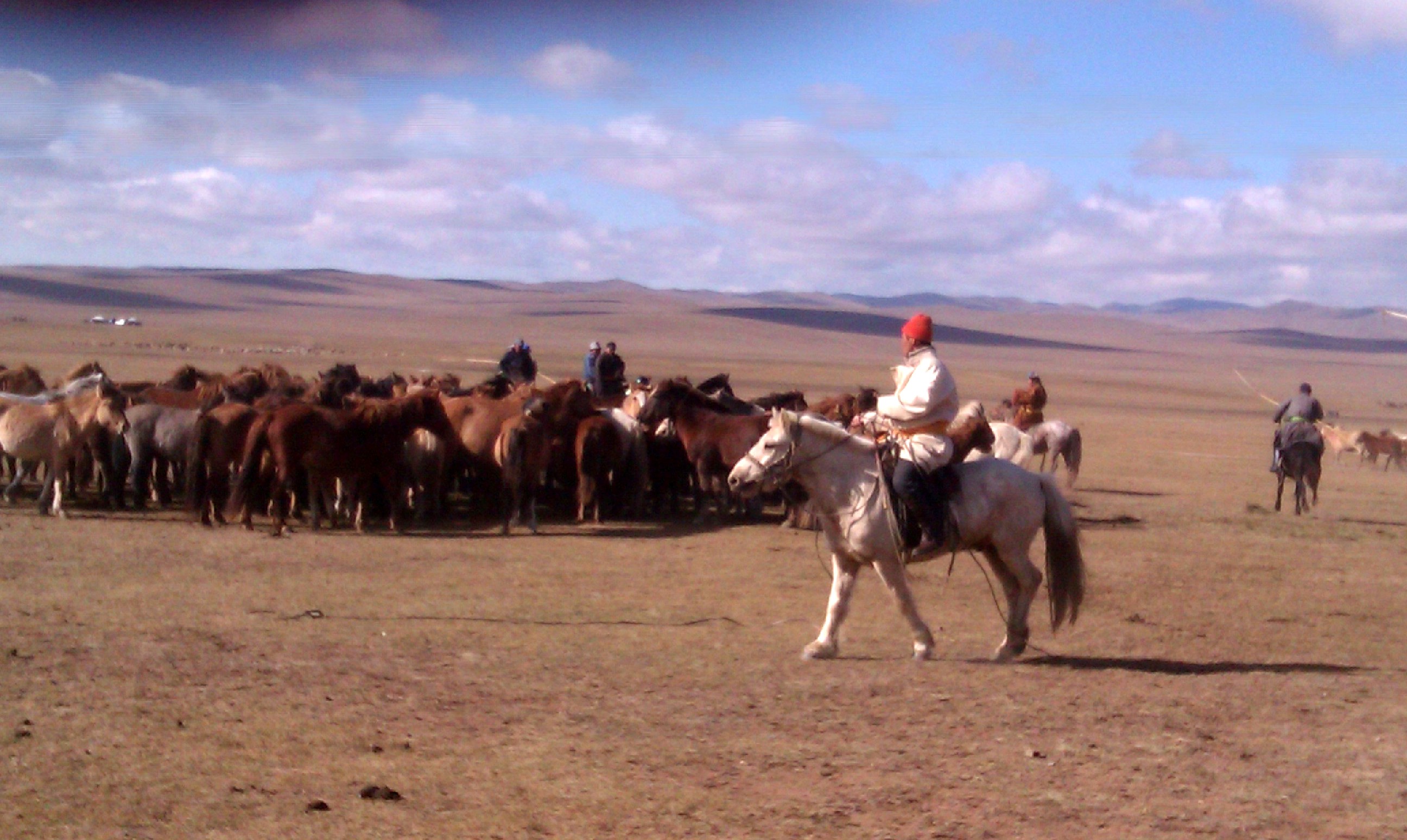
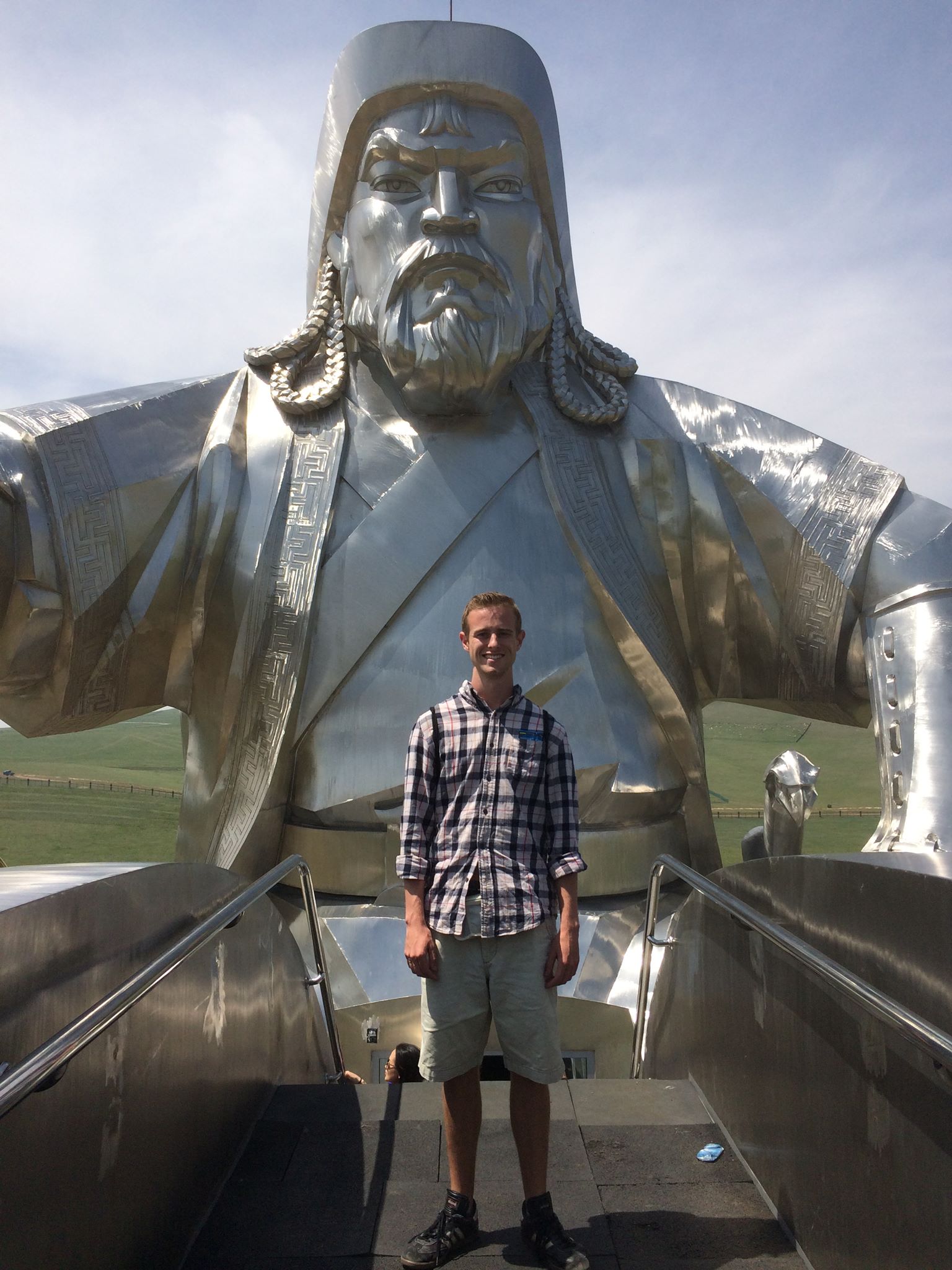
 My work in the TV station was very fun. I would research for some stories and write them down. Then we filmed some shots, edited them and they were shown on Mongolian TV. I almost got an interview with the Mayor of Ulaanbaatar as I was writing a story about the changes in traffic. The traffic in Ulaanbaatar was the biggest culture shock. The people, who are otherwise warm and calm, drove around like ancient warriors. I also wrote a story about Mongolian fashion. The women have developed an excellent sense of style. And by researching their traditional clothes, which were both practical and eye catching, I could see where it comes from. Women’s clothing on the dusty streets of Ulaanbaatar were definitely sights by themselves.
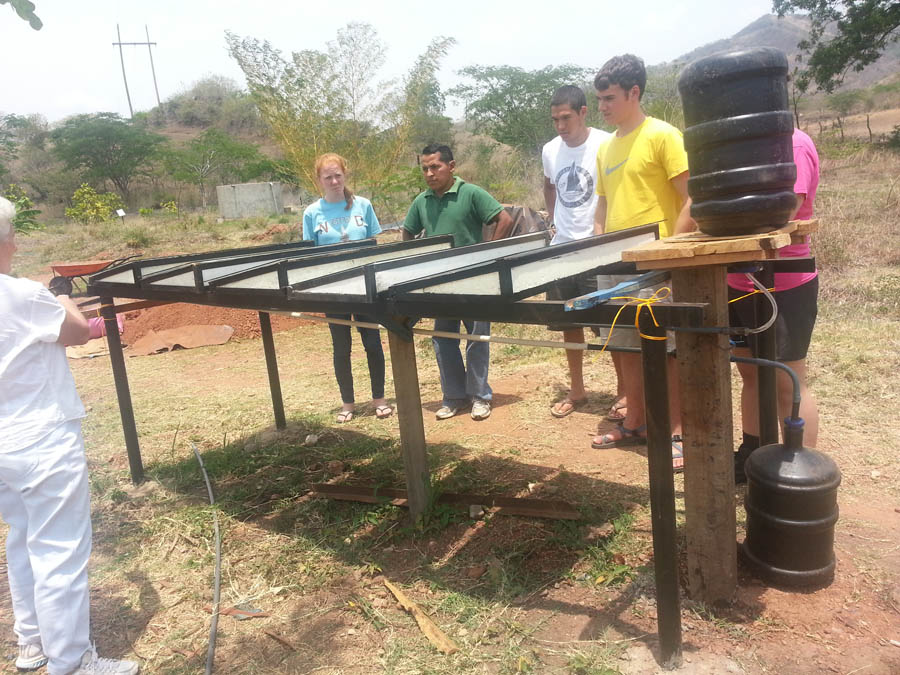
 Hence we began taking down all sixteen panels. The panels are 18V, 3A, 60W. Two systems are in place at the Centro Solar. Four panels link to a charge controller at 18V from which the lighting of the building is run. The twelve other panels are connected to a second charge controller at 36V which runs to an inverter to provide sockets with electricity to run computers and charge phones and tools. The panels had been installed in 2007 and little to no upkeep had taken place since then. We were surprised to find ten still working since the rust and corrosion had turned many of the wires into dust. This signalled to us they not only needed a repair but a redesign.
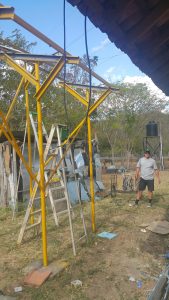
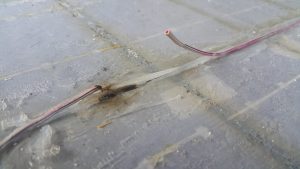 slow and it took two and a half weeks to eventually get through the entirety of the panels. Admittedly our progress was sluggish but we were hampered by rusted through bolts holding up the panels, false delivery claims of new materials and I suppose a lack of coordinated work on our part due to the other couple of projects that were on-going at the time. However the day before Easter break all sixteen panels were up and ready to be wired.
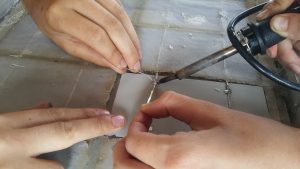
 We had discussed wiring plans before Easter and we spent an afternoon writing up a project budget for the system. Essentially, tubing would be used to add structural support to the wires as well as it being visually pleasing. The newly soldered connections would be surrounded by ten centimetre pieces of PVC tubing filled with silicon glue to act as a sort of waterproof resin and prevent further penetration of rain into the delicate copper connections. Two long PVC tubes would run along the tops of the panels collecting all the wiring and, once they joined, a single tube would run from the panels over to the building.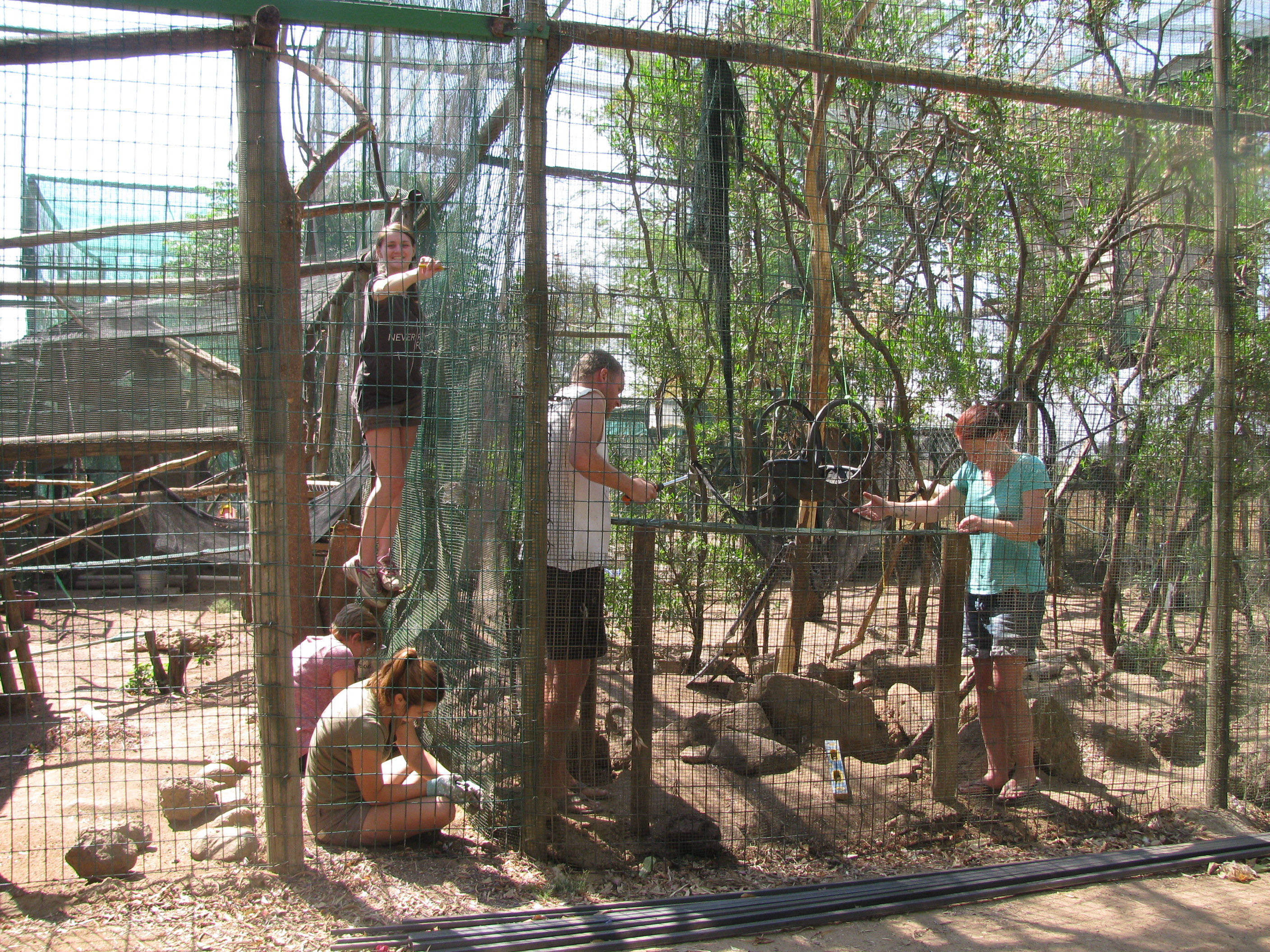
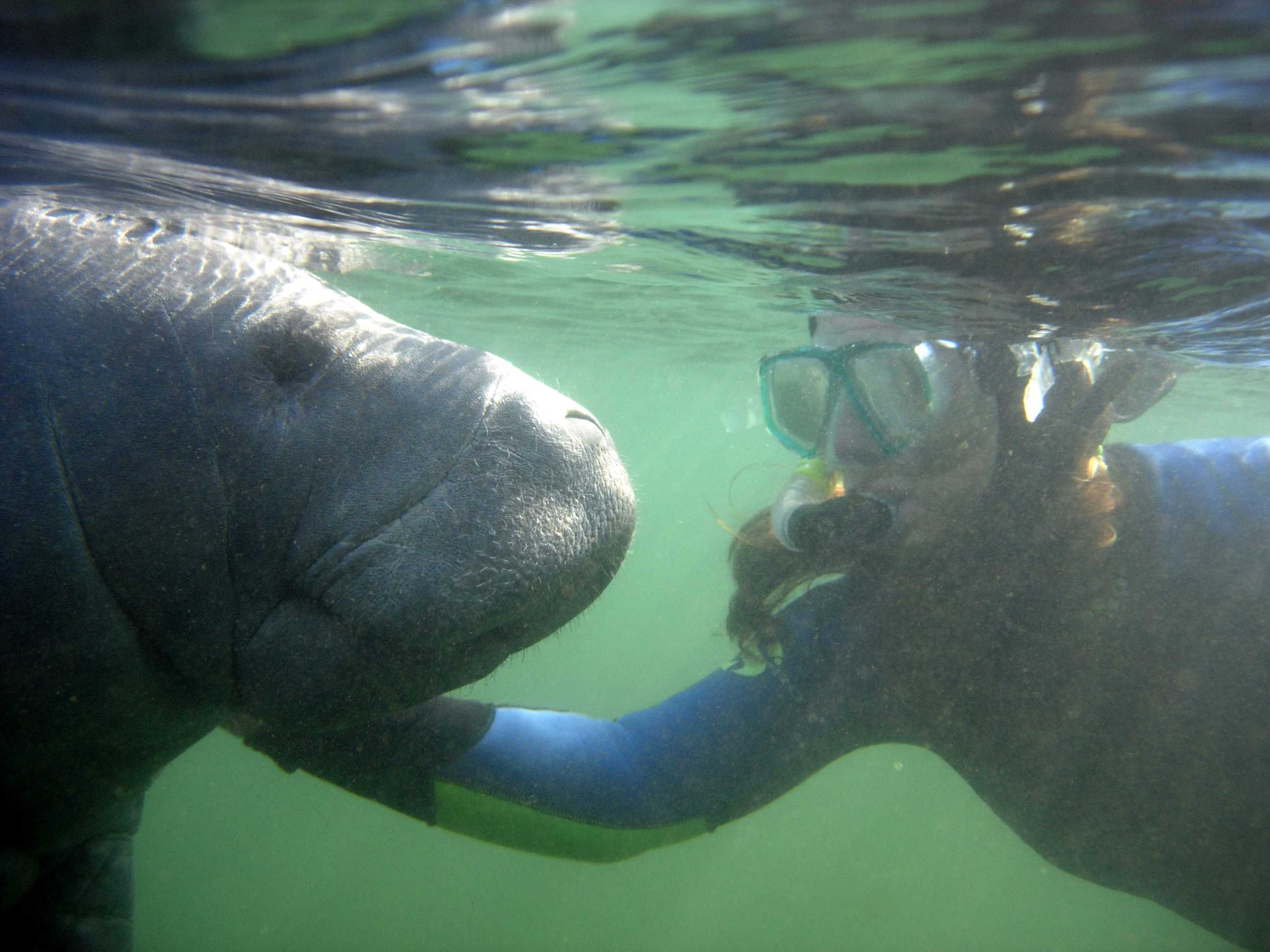
 Bottle feeding wasn’t always the easiest as they are wild animals and have many moods and temperaments. It was not rare for one of the manatees to decide they didn’t want to be fed at a feed, which meant it was time to be very patient because the wait and persuasion to finish the bottle of formula could be quite the ordeal. It was amazing to learn each of the personalities of these animals and begin to realize how to handle each of them when it came to the feeds. The close and personal connection you create with these animals is something I will never forget and has motivated me even more to want to help and rehabilitate animals in need.”