My experience during a wildlife internship in Utila


“During my placement on the beautiful island of Utila, I engaged in a multitude of tasks each contributing to scientific research and helping to raise environmental awareness among the local population to aid wildlife conservation and promote the sustainable development and extraction of their resources.

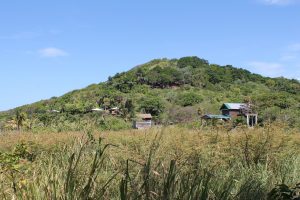
pumpkin-hill-on-utila-located-close-to-kanahau-research-centre

  • Research on the endemic utila spiny-tailed iguana

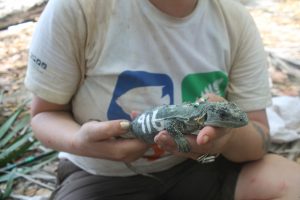
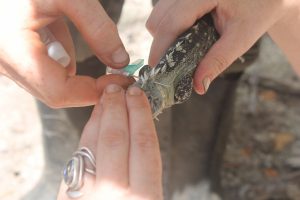
I assisted Daisy Maron with the population estimation study on the critically endangered iguana. This study aims to give an accurate description of the extent of the population on the island. Commonly called the swamper, the status of this species has just been reassessed to critically endangered. Out in the field, I was charged of catching iguanas and processing them in order to collect data. This included measures of the snout-to-vent length and tail length; identifying their sex; weighing them and tagging them with beads.

Another ongoing project is aimed at evaluating the extent of hybridization between this species and another more common species of iguana found on the island, the common spiny-tailed iguana. This is done by counting the number of “rings” of the tail of each specimen, as it is different in each species.

iguana-processing-ctenosaura-bakeri

Picture: Iguana processing (Ctenosaura bakeri)

iguana-tagging-ctenosaura-bakeri

Picture: Iguana tagging (Ctenosaura bakeri)

  • Community engagement and working with local schools

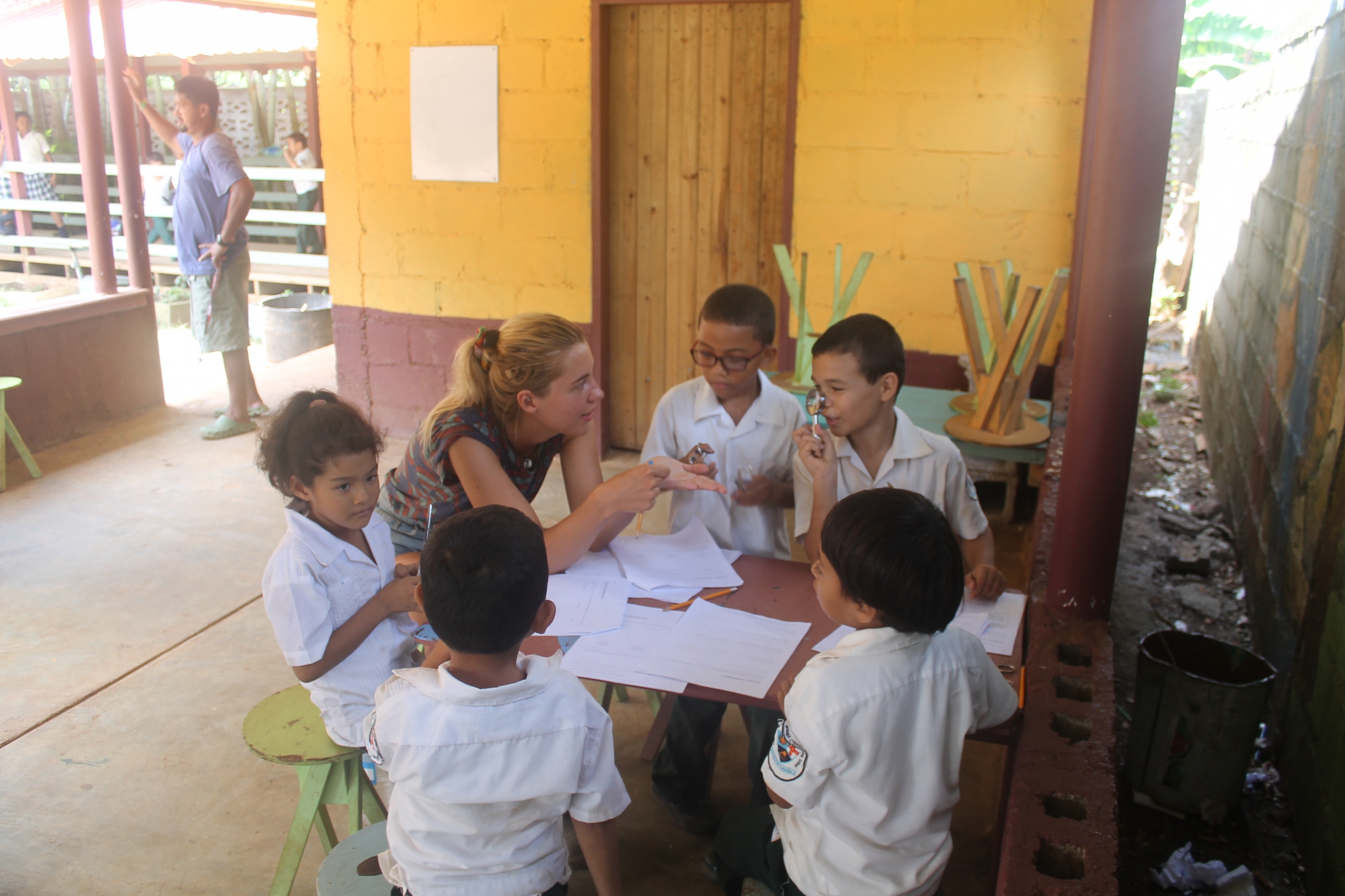
One of the scientists present at Kanahau works everyday with all seven schools present on the island. The children are taught biology and wildlife conservation with a particular emphasis on the wildlife found on their island. This aims to enhance their knowledge about the beauty of nature and help them understand its importance.

Along with Andrea and other volunteers, I have participated in the making of the Project “Eyes of Utila”. This project gives the opportunity to children in all schools to have a go at wildlife photography. Some classes were given cameras free of charge and a competition has been organised, congratulating the best pictures with prizes such as a digital camera, a diving course, cinema tickets, etc… The best 12 pictures will also be put together in a calendar that will be sold on the island.

See the official website to check out the pictures: http://forutila.tumblr.com

I have also worked on a project organised by ‘Think Beyond Plastic’ with the help of other NGOs on the island, which consisted of leading workshops in schools to make children aware of the danger of plastic and teaching them how to use less and recycle plastic. These two projects are definitely major successes as the children were very receptive and eager to learn more and participate, which gives hope for a change in cultural views of the protection of their wildlife on the island.

me-olivia-during-a-workshop-at-the-public-school

Picture: Me (Olivia) during a workshop at a school

  • Research work on orchid bees

At the centre, some work is also being done on orchid bees.

These bees are fascinating – the males are attracted to particular scents from the orchid flower and collect pollen from it. As a result, these scents (fragrances) accumulate on the males’ foreleg and are dispersed during their mating displays.

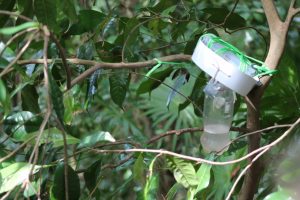
As shown by the picture below, me and some other volunteers have set up traps in order to collect the orchid bees and gather data. The bees are trapped using different scents sprayed on cotton pads that are hanged on a string in a bottle half filled with salt water and soap.

A study done in Cusuco National Park in Honduras had previously demonstrated that 30drops of scent were necessary in order to attract the orchid bees but any number above did not make a difference. We therefore sprayed 30 drops of scents on cotton pads coming from different species of orchid bees in the hope of identifying whether different species of orchid bees are attracted by the scent of specific orchid species.

Camera traps were also laid out to find out whether our traps were successful in catching every orchid bee that was attracted by the scent. Unfortunately, the traps turned out to be unsuccessful, as most orchid bees that would settle on the cotton pad because attracted from scent would not actually be trapped and die. This is however part of the research process and encourages us to find better monitoring techniques.

orchid-bee-trap

Picture: An orchid bee trap

  • Research work on the nesting habitat of the endemic iguana

One of the scientists at Kanahau was doing her Masters research on identifying the nesting habitats of the swamper iguana. For this, we have laid out habitat surveying plots in areas where nests have been found as well as in areas where no nests were present (as controls). This was quite challenging physically because of the heat and unfortunately was not the most exciting project due to the repetitive tasks, however we made some interesting observations. For instance, we have noticed that iguanas were still nesting on beaches heavily polluted with plastic detritus. This gives hope for future management of the species.

  • Bat research

Unfortunately, no work could be done on any of the bat species currently found on the island because the research centre was still waiting on the permit needed to legally survey and process bats. This was a let down at the start of the placement, especially since working with bats is advertised on the description of the placement.

However, we did check out a few caves on the island and I was very pleasantly surprised with the number of bats roosting in these caves – they were hundreds! This is still and important observation and assures that extensive research can be made on the different species found on the island.”

Wildlife Research Internship in Honduras


How Volunteering In Communication Gives You Multiple Perspectives Of What Volunteering Means


“The communication department of Voluntario Global, the local Argentinian NGO I worked for, is only composed of volunteers. They come from all around the world and work together to create content that they put on the website of the group or share on social networks. Communication volunteers are really important for the NGO because they are the only ones that show what the organization does, how the different projects work and why volunteers are needed. Moreover, as they are volunteers themselves, they are able to write about what volunteering means with their own perspectives and stories, what is much more personal and valuable for the people that read the website and are thinking about volunteering too.

As a member of this communication team, my role was to go to most of the projects the organization worked with and to write about them. I mainly had to interview the coordinators of the organization and the volunteers that worked there in order to write articles and descriptions that would help the organization to promote and introduce the projects they are participating in.

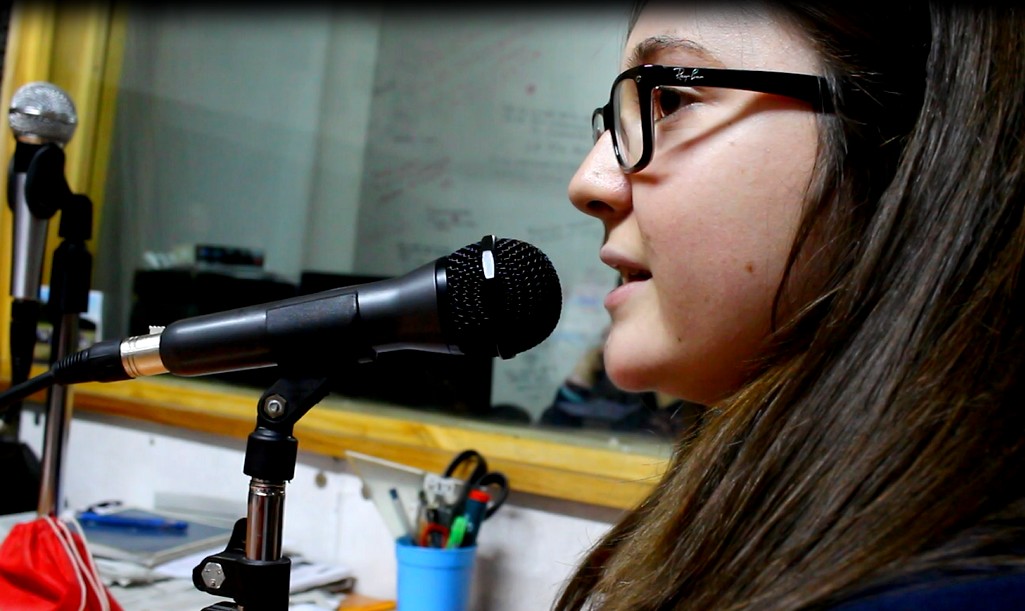
In this end, I spent most of my stay there visiting kindergartens, a soup kitchen, an orphanage, an English school and a communitarian radio station. More than only writing about these projects, I also had the opportunity to get involved in all of them, what was extraordinary rewarding. Indeed, thanks to this experience, I spent time playing with children and cooking for people that lived in poor areas and weren’t able to afford buying food for their families. However, I decided to participate more deeply in two projects, where I teached English in a small extracurricular school and talked about political and social matters in a communitarian radio station, once a week each for two months.

If at first we can think that writing articles about projects doesn’t really make you feel like a proper volunteer, I honestly believe now that it gave me much more perspectives about volunteering that the people that volunteer at full time in one single project. Indeed, helping and going to all these projects made me know much more areas and people, what is the best way to truly understand and learn about the different communities and the global situation of the country.

I think it also makes you realize what is the true impact and point of the organization you’re volunteering for. This is also why I am glad to be able to share what I lived through articles so that future volunteers can know more about the different projects, about volunteering in general and about Voluntario Global. Volunteering amongst the communication team also made me improve and develop my writing, understanding, speaking and video making skills.

To conclude, this internship gave me a complete vision of the organization’s work in Buenos Aires and I’m grateful I had the opportunity to cover and to get involved in all the wonderful projects that are set up there.

VOLUNTEERING TO DISCOVER A NEW COUNTRY

Being a volunteer abroad is also an opportunity to visit a new country or a new city, and for me it represented the first time I was going to South America. I didn’t really know what to expect from Buenos Aires, but all I can say is that I really enjoyed my stay there and I’m sure to go again.

First of all, I am glad I went to Argentina as a volunteer and not as a tourist, because I discovered amazing people through the projects I went to that I wouldn’t have met if I only went there to visit the center of the capital city. Indeed, I volunteered in small and poor towns located in the suburb that are far from what we can expect when we think about Buenos Aires, but these are the places where I had the opportunity to truly understand the political, economic and social situation of Argentina. I met wonderful people and I have a multitude of memories thanks to the moments I shared with the local inhabitants. I honestly believe that they gave me more than what I gave them as a volunteer, and this is the most beautiful thing I experienced while living there.

Through my travel to Argentina, I also had the opportunity to discover a strong cultural and historical wealth. This city is full of museums, cultural centers and monuments you can visit. Moreover, I was in Buenos Aires for July 9th 2016, what was the bi-century of independence, and this day was full of shows and performances that related the main events in Argentina’s history. People were celebrating this day as the beginning of Argentina as a new country with its own culture and history, what we still feel every day when we walk in Buenos Aires streets. Indeed, people there are truly involved in what is happening in their country and they are willing to share their habits, believes and customs. Walking in the streets and being able to watch tango shows and music players was amazing! Moreover, Argentina can also be recognized thanks to its food. I enjoyed eating wonderful pieces of meat, empanadas, medialunas and alfajores! And, even if I didn’t really like it, it was good to discover the “mate”, the typical drink they share and bring with them everywhere!

Finally, I discovered a lot of beautiful places that make this city unique and very attractive. In Buenos Aires, you can find amazing buildings such as the Palacio Barrollo, the Congress and the Colón Theatre, a lot of parks, a natural reserve and even a planetarium! However, my favorite place remains Puerto Madero, where I had the opportunity to see the most amazing sunsets and sunrises. There are also places whose architectures are pretty original such as Floralis, the Obelisco and the cemetery of La Recoletta. This city is also full of life and you have an infinite number of restaurants, bars, clubs or shows to have fun and meet new people.

Thanks to my experience as a volunteer in Buenos Aires, I had the opportunity to discover a unique and extraordinary city, whose beauty is not seeable at the first sight but is deeper and absolutely worthy!”

NGO Communications Internship in Argentina 


Final Report

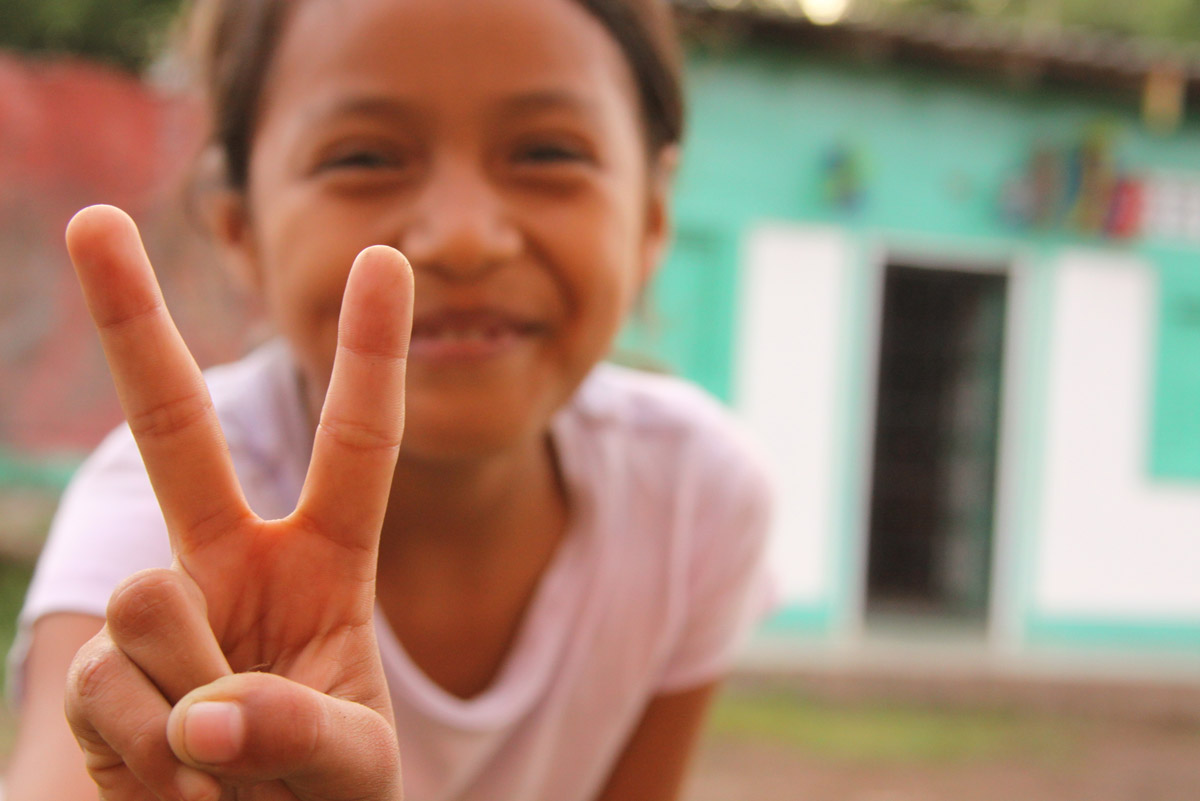
Smiling girl in Nicaragua


“I volunteered with Grupo Fenix for two months this summer in Sabana Grande, Nicaragua, and greatly enjoyed my time there. After spending two weeks at a Spanish School brushing up on the language, I arrived at the Solar Center on July 7 and spent the majority of the first week going through orientation, getting to know my family and other volunteers, and getting used to life in and around Sabana Grande. By my second week, I had begun working with a few of the other volunteers on a water catchment system for the Solar Restaurant, which would wind up taking most of the next three weeks. When that project was completed, I moved on to a similar system being installed at the solar mountain, this time working with Hilario, one of the local engineers. I had to leave before that project was completed, but I heard after I arrived home that it had been successfully finished.

All in all, I greatly enjoyed my time in Nicaragua this summer. From getting to experience working for an international NGO firsthand, to making lots of great friends, I wouldn’t have spent my summer any other way.”

Time to go home!


“I have now left China, and arrived at my final destination. It has been two very interesting weeks, with numerous new and diverse impressions and experiences. While I have encountered some challenges, I would definitely say I am left mostly with positive memories. Further, I can safely say that this project is one I am very happy I participated in, and also that I am very sad to already leave China. If I could, I would definitely have stayed for longer.

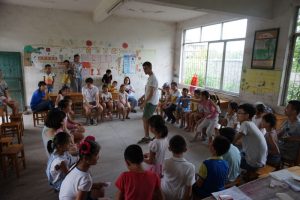
The last week, I was very busy with doing actual volunteering work. First of all, I had to be at the summer camp six hours a day (even though I did not actually teach for six hours). Teaching and interacting with the children continuously for such a long time turned out to consume a lot of energy, much more than I had expected. In addition to this, a certain amount of preparation had to be done in advance of each day. I would have to, in collaboration with another volunteer, make lesson plans for each and every English class. Our entire group would also meet in the evenings to discuss how the day had fared, what was done well, what could be improved and to discuss tomorrow’s lesson plans. While this doubtlessly was beneficial, it was nonetheless time-consuming and tiring, especially when all members of the 8-person group had differing views. The effect was amplified as a result of communication difficulties in the group. While intentions by all means were good, we struggled a bit as some of the volunteers had slightly lacking English skills, so this was something we, as a group, had to work around.

Despite these challenges, I think the project turned out rewarding. Working in such diverse groups is always difficult, but it teaches you a lot about compromise, respect and communication, as well as the importance of it. For me, this, the development of inter-personal skills, was a really important aspect, and I think it will benefit me in the remaining two years of my studies and also in my future jobs. Working with people from all over the world is getting more and more important in this ever-increasingly globalized world, and being able to practice team-work with people of different cultures and nationalities in the supporting environment provided at a volunteering project induces growth in an professional, but not overwhelming, situation.

Not only do I think the project was rewarding for the other volunteers and me, but I think it was also very beneficial to the children. First of all, they had something to do. This was a summer camp, so while the children had free from school, the parents were still working hard in the village. This means that the children were largely left to themselves during the day and the summer camp was a place for them to do something meaningful and also interact with the other children from the village. Secondly, and of course very importantly, was the pure learning outcome. While some children are always difficult to teach, due to lacking interest in the subject, in general, the children learnt a lot. Also as the classes were, in their entirety, designed by volunteers, the curriculum was a highly diverse one, offering a lot of interesting content from a range of subjects. Lastly, the children were exposed to different cultures through us foreign volunteers. It is important to remember that these children live in poor villages in mainland China, and their exposure to new cultures is very limited. This is an aspect that was emphasized at the volunteering camp as well, and I agree that it is an important one. In the end, the growth, both academic and social, of the children is the aim of the summer camp, and it felt truly amazing to be able to provide them with possibility to do just that.

In my opinion this project was a huge success. Both for myself; I believe I have learnt and experienced a lot and massively broadened my horizons, especially from a cultural perspective, and for the children. I am overjoyed to be able to say that I believe the summer camp, and also the time I spent in the kindergarten during my first week, was a success from an “academic” standpoint. While I heard some volunteers say they were a bit disappointed with the amount of knowledge the children had actually absorbed, I have to disagree. I can kind of see where they are coming from, but at the same time, i think it is important to realise that we were just there for one week, and that was during a summer camp. In my experience they did actually even learn quite a bit, but we were obviously in no position to teach them complex mathematical concepts or to read and understand long and challenging books in English. However, we did expose them to topics which they will encounter at school in the upcoming years, and just as importantly, to out-of-school situations in which they might find themselves in the future. I hope, and think, that this exposure can turn out to be very valuable, and might have provided them with a foundation from which they easier will learn the more complex parts later.

Finally, I would like to emphasize how valuable these two weeks have been to me. While I hesitate to say that it was the best and most rewarding two weeks of my life so far, I genuinely do not think it is far from being the truth. My time at the volunteer camp entailed intriguing cultural experiences, eye-opening discoveries of everyday-life in China, personal growth in several areas and the formation of new friendships. All of these aspects have made sure that this have been an experience, which now that I have completed it, I would definitely not be without. Who knows, I might even head back again next summer.”


by Thomas Espaas

Volunteer Teaching programme in China

First week done!


“After having completed the first of two weeks as a volunteer teacher in the Guangxi province in China, I am left with a range of different experiences and impressions. Upon arrival at Guilin international airport, I was picked up by a Greenway China coordinator along with along with another volunteer. As we were driving from the airport to the train station, we made a stop at a small restaurant. As my fellow volunteer and I followed our Chinese coordinator into the restaurant, each and every face turned to look at us. It has become clear that this would in no way stand alone as a unique incident. It would rather account to the first of many situations in which I would simply have to accept careful examination by locals, as if I was some being completely unfamiliar to them. I think this is something every traveller of non-Asian origin will come to experience if they visit China, and especially if they visit the less tourist-heavy areas.

The day after I arrived in China, I was sent straight into the kindergarten with the 12 other volunteers. I had been wondering how to solve the language barrier which resulted from me being unable to speak any Mandarin. This was actually one of the most significant challenges I encountered during my first week, but was made easier to overcome as every foreign volunteer was paired up with a Chinese volunteer. Dealing with young kids proved to not always just be easy. One of the keys to success was realising that many issues related to the kids’ occasionally short concentration span could effectively be countered using fun, interactive and physically engaging teaching methods.

Another helpful part was understanding the value of playing games just for the sake of playing games. Of course, as a teacher one always wish to teach the kids as much as possible, but with kids being as young as they were (4 or 5 years old) trying to continuously push across huge bulks of theoretical content may become so boring and mentally exhausting for the children that it may in fact be counterproductive. Sacrificing, say, 15 minutes of time to let the kids disconnect through playing games may actually improve the overall efficiency of the class. Building on this philosophy, we were able to create a programme which the kids engaged so actively and eagerly in that they, with absolute commitment, continued participating in class activities throughout their breaks. Viewed from a teaching standpoint, the first week was a definite success.

Chinese culture offers many differences to the Western culture I am used to. First of all, your position in society is a very different one. The expectations you are faced with are different for every relationship you make, be it as a peer, friend, teacher, mentor or mentee. Being open-minded and leaving behind perceptions and earlier experiences creates a fundament where receptivity to what natives tell and ask of you, can be used to adapt to, understand and experience the culture, and all which follows, in an authentic environment.

The kindergarten has now finished for the summer, and next week we will be sent to a summer school for primary school students. My group is responsible for grades 1 through 3, but we are free to combine classes and cooperate with the group whom are responsible for grades 4 through 6. Right now I am sitting here, the day before classes commence, and preparing content and activities for the first classes, hoping that my experiences from kindergarten can be transferred to primary school. More generally I can say that I hope that I have learned something from the experiences I have had this first week, and that I will be able to build on these to tackle situations in a better, more appropriate and more rewarding way than I would have earlier. I can probably even extend on that idea to word what I believe to be the very essence of this volunteer internship; these type of experiences gives students of some nationality the possibility to experience a very different type of culture, and to use their experiences to deal with situations which they will encounter later in life, in a more tolerant and respectful way. And in all fairness, I believe this is something this very programme is well on its way to achieve.

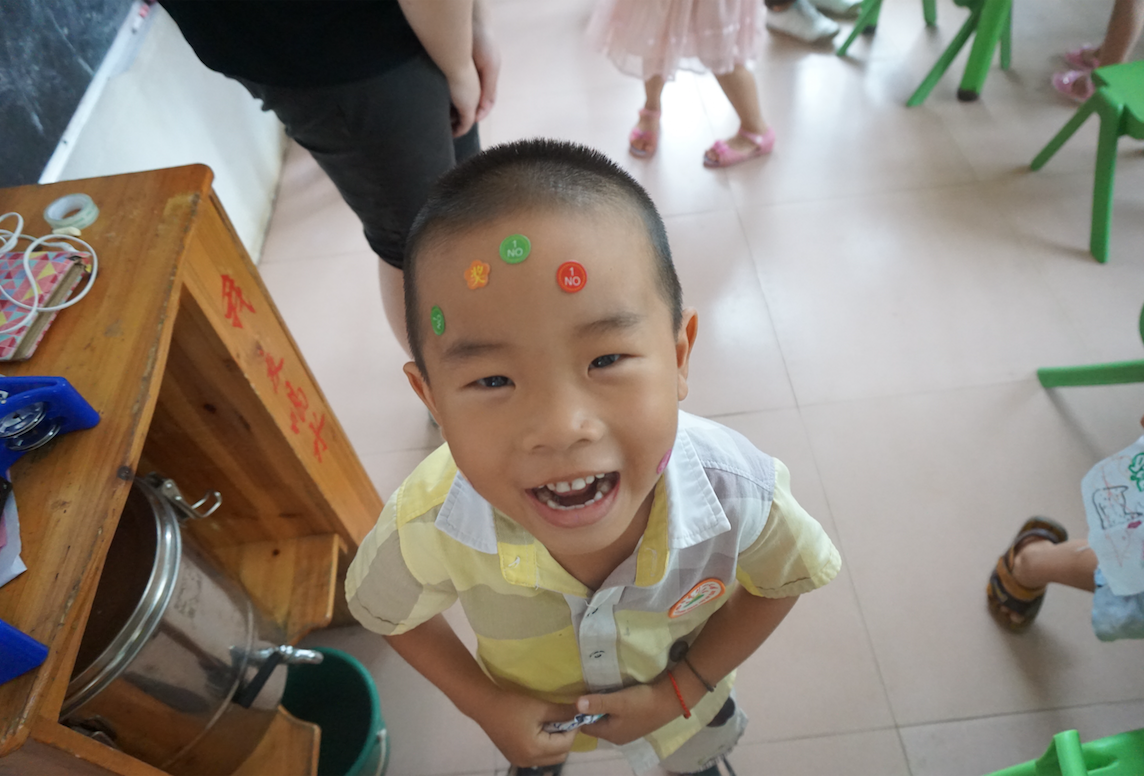
PS. Kindergarten kids love stickers.”


Volunteer Teaching in China

Day by Day report (detailed!)

Day 1 – 6.11.15

So I’m finally here. Bag-less, but relieved.

My journey started at 4am on Saturday, in order to make it to PDX security by 5:30. By the way, that is way too effing early. Mom made sure I had caffeine and reading materials before giving me one last hug and au revoir. She’s the best. Unfortunately the bohemoth of a security line went really quickly and I had to dump most of my latte in the trash to get through TSA. Since when are they so efficient? For once, it kind of pissed me off.

So I’m through security, re-caffeinated(ish) with a fresh Stumptown latte, and at my gate. Time for a social media post. Except in my flurry of finding adequate coffee and my terminal, I had passed all of the trademark ugly PDX carpet. Daaaaaannnnngggit. Good thing I had to use the restroom, so I picked up everything that I had JUST set down in order to relieve myself/get my insta post on the way back. Shameless.

The order of my flights went like this: PDX>SEA>DXB>KTM

Portland to Seattle was delightfully uneventful, as I listened to the podcast Two Dope Queens in the window seat while the passenger next to me took a snooze.

Seattle to Dubai was a whole different story. I was seated in the middle section, sandwiched in between two large men. My mom foresaw this, and told me I should bat my eyelashes and ask for an aisle. Should have done that. Armrest room? Haaaa. For 13 hours and 47 minutes I hugged myself and watched free movies/pretended to sleep. Shoutout to mom for the anti-anxiety meds, those saved me! By the way, “How to be Single” and “Run” are excellent movies.

The Dubai airport was something else. Everything was duty-free designer and the clocks on the walls were Rolex for crying out loud. I didn’t venture to see the mall, as I wanted to find my terminal first. Turns out that wasn’t a bad idea, because finding the F gates turned into following signs that led to more barren and empty parts of the airport and I soon found myself walking alone after a while. Soon found myself on a bus that transported passengers between terminals that took about 20 minutes to get to Terminal 2 AKA the farthest, smallest, least tricked-out terminal in DXB. By the time I got there, I had no gusto or bravery left to leave and try to see the mall. After exchanging some USD for AED, I got myself a sandwich and a couple bottles of water, then parked it in the lobby to read.

When boarding my last flight to Kathmandu, I ran into some fellow PNWers that had recognized me from the Seattle flight. I had no idea how much some fellow West-Coasters would calm me down and breathe a little easier. Side note: the 102 degree heat in Dubai was always an unpleasant surprise when leaving the terminals to board the bus. And the sky was brown. Just saying. I totally zonked out the entire flight which I was okay with, due to my lack of shut-eye on the SEA>DXB plane.

We arrived around 10:20pm in a drizzle of monsoon rain, but due to the time and the weather I couldn’t see any of my surroundings. Getting my visa was fairly easy, as they have machines that fill out the applications and take your picture for you. Everything was “so far, so good.” Sike. After getting past the immigration officer, I was introduced into a new environment of push versus shove versus “let’s cut this American chick in line because she obviously has no idea what’s happening rn lol.” The so-called security checkpoint was a frenzy of people shoving past each other to get their belongings in the X-Ray and elbowing their way 2 and 3-fold through the metal detector, some having to loop around because of the repeated detector alarm. After I finally made it through, I found my backpack and compression sack sprawled along the floor, the two X-Ray monitors looking after me with utter disinterest, quickly going back to fiddling with their phones as the bags passing through the machine slid across the monitor. Sweet.

Next step was to claim my bag, which I was assured multiple times at each check-in gate would arrive, which I could not do because I was later informed that it was left in Dubai. Forrreeeeaaaal? 5 hours between landing and takeoff and it didn’t make it? Ugh. Thankfully my PNW friends were with me throughout this ordeal for moral and mental support while I struggled with the customs officer to get everything in order. I have to go back tonight in order to claim it. Fingers crossed it’s actually there.

After that ordeal, I exchanged my USD for Rupees and bought a SIM card for my phone. Cool, that worked. As I was finishing up with my phone business, my contact from Green Lion found me, and I think I heard music I was so happy and relieved. And then she said…. “Our car isn’t parked within this parking lot, as there was a bomb threat and security at the airport is so tight that they are not letting passenger cars in. We have to walk to the car, is that okay?”

I’m sorry…. Bomb threat?

So we walk to the car, get in, and proceed down many narrow winding back alleys to arrive “home.” By this time, it’s midnight. The place that I’m staying at is currently under construction, but the food and wifi is at a house down the street, so I can’t complain. Plus, there are bunk beds. All I could say after that was Namaste, and goodnight.


Monday 7.11

We started something called Culture Week, which is like an introductory week where they give us morning classes and afternoon field trips. I met my other culture comrades, all from other countries like Holland, Germany, France, and Egypt. And that’s not even considering the other volunteers already in the house. Classes, meals, and downtime are spent in the “White House,” where Rajesh (Director of Green Lion Nepal) and his family live along with other volunteers in the program. We had ice breakers followed by a combined Buddhist/Hindu greeting ceremony. After that, we were given our Nepali names. Apparently babies are not named until 10 days after their birth, where there is a ceremony and celebration upon the selection. My Nepali name is Kamana, which means “Desire.” Just had to laugh that one off…

In the afternoon session we were given places to find in the area around the neighborhood, ours was “Bashundhara.” Turns out it was the taxi/bus/transit area at the base of the hill of where we were staying, Dhapasi Heights.

After we got back from our little afternoon adventure, we stayed in the White House for down time until dinner. For me, I was waiting until 6:30pm when the airport said my bags would be at the airport for me to pick up. Turns out that Ring Road at 6:30 is rush hour, so it took us an hour to get to the airport that was originally 15 minutes away. The bag exchange was quick and easy, except they didn’t give me the $50 for having me wait a day that Rajesh said that I was entitled to. I was already down a total of 1000 rupees for the round trip to claim my bag. They simply said no, turned around, an ignored me after I got my bag. Kind of a bummer, but I had my stuff.

The drive back also took about an hour, but not for the same rush hour traffic reasoning. Timme and I were dozing off in the back of the cab, when we woke up to a loud noise that accompanied a jolt through the entire cab. There was a van that had come into contact with our front left side, wedging our mirror up against the car in a fashion that made me think it would need a little more than duct tape to fix. The driver immediately got out, started yelling at the other driver, got back in the cab, pulled over on the side of the road, and then they both hopped out and proceeded to argue over the damage to both cars. We sat and waited for 30 minutes at least, continuously being hushed by the driver, until another cab pulled up behind us. Great, we thought. Five more guys hop out and join in the debate. Eventually they put us in the new cab and drove us home, even had me pay full price.
Tuesday 7.12

For Culture Week, we had an ice breaker game of limbo and then started talking about places to go around Kathmandu. Can’t wait to explore all of it! We also had language lessons where we learned how to say our name and where we are from. After lunch, we went to Budhanilkantha (Sleeping Vishnu). We were only able to see it from outside the gates because only Hindus were allowed to approach. It was beautiful.
Wednesday 7.13

In class, we learned about Buddhist and Hindu culture in Nepal, as well as many traditions or customs. This was mostly in the form of a Don’ts list.

Don’t:

Whistle in the house, it draws bad spirits

Use your blanket as a mattress, it brings everyone in the house bad luck

Show the sole of your foot towards someone, it’s rude

Touch someone’s head

Share food, it is considered “Jhuto”

Wear shorts above the knee

Wear tight clothes, transparent fabric, or tank tops

Go bare-chested (men)

Give anything to beggars

Share a room with the opposite sex if you are not married

After lunch, we went to Boudhnath where I led the presentation along with Bishanti and Mohan (Babette and Max from Holland). The stupa was amazing, it was so big and beautiful. However, it was still under construction from the 2015 earthquake so we couldn’t see the very top of it. We explored the side streets of the stupa, where there were many vendors that I was able to buy more presents from.

Thursday 7.14

At 7am we had yoga on the rooftop of the “Green House” because it was raining and we could not do it on the lawn. After yoga we had breakfast and more language lessons, followed by a culinary lesson of sorts. They had us make lunch! We made this kind of fried bread and turmeric potatoes with chili powder, it was really good!

After lunch, they sent us on a scavenger hunt in the market to buy cheap herbs and miscellaneous items. The list of items was in Nepali (of course!) that we needed to buy. I only figured out how to translate a couple items, but they never told me the other items I bought, the shopkeeper just recognized the word and gave them to me.

Friday 7.15

We woke up for an early breakfast so we could go hiking. We walked through the neighborhood and quickly it turned into countryside. We crossed a river and further into the hills where it became more rural. Eventually we stumbled upon another temple and climbed the large hill behind it. I would call it a mountain, but I know better when in the land of the Himalayas. During our climb, we “adopted” a small pack of stray dogs that continued with us until the walk back home. When we were at the top of the hill, there were also hawks that were circling around our heads along with herds of goats below. The Kathmandu Valley was laid out in front of us, clear and sunny.

Monday 7.18

This was our first day at the hospital, and I was a little unsure about was to expect. Previous volunteers had chosen to end their time early within the program, saying that there was not much for them to do or see within the clinic.

The Stupa Community Hospital is in Boudha, which is only about two minute’s walk from the stupa we had visited the week before. Once we pulled up to the hospital, we almost passed it because we didn’t recognize the building as one from the health sector.

The entire hospital is practically open-air, as it has circular levels around an open courtyard. It is about 5-6 stories tall, with each corner dedicated (or sitting vacant) to a different “ward.” Wards are about the size of a large living room and in some cases like the general ward, maybe add on a dining room for size. Stupa only has 55 beds within the facility, and is apparently due for closing down soon due to a newer, larger community hospital’s construction. In Nepal, they have changed their requirements for every hospital to have at least 100 beds.

We were greeted warmly by the head nurse of Stupa; Nila. She gave us a quick run-down before an even quicker tour (due to the small size of the hospital, not because it was not well-explained). There was only one main doctor at the hospital, a GI named Swasti (I have forgotten his last name, it’s about 20 letters long), along with multiple junior doctors completing their residencies that staffed the wards and the ER in the meantime.

As we were looking around, we were shocked if not in awe at the conditions. Which I was expecting, but had no idea what that would really mean in the moment. Doctors and nurses commonly wear flip flops, ALL records are on pen and paper in logbooks, intermittent power outages are deemed commonplace, patients walking in and out of different wards freely (sometimes interrupting doctors with patients, I don’t think they have the same HIPAA standards here….just a hunch), everything warranted sharing a wide-eyed look with my fellow volunteer. This was real.

We were told that this would be mostly observational, which I soon became more than okay with when I realized the amount of TB and other diseases like typhoid and meningitis that were flooding this hospital. No touchy? No prob.

After lunch, we went down to Nila’s office and met other volunteers from other programs. Two of them were also from the US, and a pharmacy student from France. They were nice, and gave us a bit of a heads-up for the rest of our time here. Very laid back hospital, nothing to be too worried about.

Tuesday 7.19

This was our first day with Dr. Swasti, which meant we were in for many an endoscopy. The endoscopy room is a small, unimpressive little setup, but Dr. Swasti can crank them out like no other. But here’s the thing…. They perform endoscopies without any anesthesia, except a local anaesthetic spray for their throat. No thanks! These poor patients are gagging and in pain during the entire procedure, and every one warrants a biopsy. It’s hard to watch. Thankfully he’s quick, each procedure takes about 10 minutes. Between procedures the endoscopy tube sits in a tub of antiseptic and is reused. Also wow.

Wednesday 7.20

We had another day with Dr. Swasti, where we saw many more endoscopies, as well as multiple cases of TB (apparently it can manifest in different places I.e. Lungs, abdomen). Cirrhosis of the liver also seems to be common, due to many people starting to drink in their teens. This causes portal hypertension, and an ability to actually palpate the spleen. Pretty cool party trick, am I right? When Dr. Swasti was making rounds there was a patient who had previously suffered a stroke with an inability to communicate with language, but an intact ability to comprehend. I actually correctly guessed the problem, thanks to my many neuro classes at UO. Broca’s aphasia! I hope my professors would be proud.

Thursday 7.21

Thursday was another day following Dr. Swasti, and also when I started noticing certain oddities in the hospital environment. Doctors take blood pressure recordings over clothing, and usually tend to write 120/80. Every time. Especially with blood pressure, so far every Nepali patient has had a pulse of 70 or 80 bpm. For 60-70 year olds with TB, I’m starting to feel a bit skeptical. Also, pharmaceutical representatives can also come in and make small presentations to doctors about their products, hoping to sell them on the spot. Which apparently happens often.

I saw my first case of typhoid fever as well. It presented as an increased temperature with a decreased pulse. This is abnormal, as usually an increase in body temp warrants an increase in pulse in an attempt to thermoregulate (sweat it out, cool down). The tongue was coated, as well as a palpation investigations that revealed an enlarged liver. Poor guy looked like he was in an immense amount of pain. I felt very thankful for my vaccinations.

Friday 7.22

We were out of the house bright and early (5:45 to give you an idea) in order to get to the hospital by 6:30 in order to observe an open cholecystectomy at 7am. That’s a gallbladder removal by the way. When we stepped into the operating area, we changed into our scrubs and removed our shoes. Normally there are plenty of plastic shower slippers that everyone wears in the actual operating theater, but Vadim and I missed that train, so we went in with socks. Yup, no shoes guys. Open surgery. It happened.

I have seen this type of operation before, but it was done laparoscopically. The incision was about 5 inches long, on her right side below her rib cage. When done with a laparoscopy, it can be done through the belly button. Very different. There were also three surgeons present for the surgery: one to hold the incision open, another to hold up the liver, and a third to tie off and remove the gallbladder. It was a pretty crowded room, with cauterizing tools and no AC. I actually got a bit nauseous and overheated about 3/4 of the way through the surgery, there were too many people in the small, hot room.

The surgeons were open to teaching their way through the surgery, and even opened up the gallbladder to show us the stones inside. He even carried it out to the family who was waiting in the hallway. I repeat… Carried a human organ in a surgical pan in a “sterile” gown out of the OR and into the hallway to show the family. You won’t see that at home.

I feel very lucky to be here, and thankful for the many lessons shared with me. I’m having a hard time putting it into words, but I think my overall feeling after my first week would have to be a combination of humbled and blessed. Humbled by the strength and perseverance of the Nepali people and the medical staff for the conditions in which they live every day, and blessed by the opportunity to come here and learn about the realities of global access to healthcare from the practitioners themselves.


Monday 7.25

There was a strike on Monday in response to the resignation of the Prime Minister of Nepal, which manifested in a Maoist exercise of influence that shut down all public transportation and closing of many businesses, even closing down schools for the day. Rajesh told us that it would be safe to walk to the hospital… Minus the assemblies that may occur in the streets… Or to take a taxi… At the risk of having the cars attacked by protestors… Needless to say Vadim and I opted for staying inside for the day. This turned out to be a fortunate choice, because even the doctors decided not to brave the streets that day.

Tuesday 7.26

Taking the Monday off made for a plenty-busy Tuesday. It turned out that it was also the last day that people could come in to the doctor’s office to get it paid for by their insurance. Let’s just say that chaos ensued.

When we arrived in Dr. Swasti’s office there was already a stack of patient booklets, and people lined up in single file trying to make it into the small room. I was in charge of logging people into the paper register, other volunteers and I trying to create some kind of order within the office, when simultaneously people were barging into the office, interrupting the doctor during a consult. We saw triple the amount of patients that we would normally see in one day.

Oh, and we also saw heroin in the ER. That’s a thing, apparently. There was a woman who came in and couldn’t move her arms without assistance due to her intense body tremors. When the doctor asked her what she had been taking, she said that she would sniff a powder to make herself feel better. It was a blackish-brown powder that she showed the doctor, then snorted. Right there on the table. Another thing that was crazy to me is that they couldn’t take the drug from her because she said she wanted to keep it. She also said that many people in Boudha are taking it. No shit she wanted to keep it, she was an addict going through withdrawals! I died a little on the inside. Vadim and I looked it up to see what it was when we got home, only to find that it was heroin and people gave it the name “brown sugar.”

Wednesday 7.27

This was a fairly slow day, many cases of gastric pain and sinusitis. The most memorable part of the day was the new presence of three second-year medical assistants in training. Trying to seem alert and attentive to whatever Dr. Swasti was doing, only to have it come off as frantic and unorganized. When Swasti gave them a small assignment of labeling which organs were palpable in which quadrants of the abdomen, they turned to Vadim and asked him if the liver was on the left. And whenever Swasti would ask what could be the problem from symptoms presented, they nearly always parroted the previous diagnosis. Needless to say, everyone in the office was a little annoyed.

Thursday 7.28

Pretty exciting day! I feel kind of bad saying that, because it usually means that a patient is experiencing something they wouldn’t have to in the states. Maybe I should say that there were many “learning opportunities” that day. Whatever makes you think I’m not a sadistic jerk works for me. Pinky swear I’m a good person.

In the ER, a woman was admitted in the midst of such a severe allergy attack that she went into anaphylactic shock and they had to perform CPR. Thankfully she was resuscitated, and eventually recovered. The scariest part was that they had no idea what she was allergic to, and that this had happened multiple times before due to her other medical files that her family brought in with her.

We were able to watch a surgery on a TB patient to drain multiple abscesses (pus-filled sacs) within his abdomen. This was a terrifyingly invasive surgery. They went after two different abscesses, and when one popped there was an instantaneous filling of the opening with thick green-yellow liquid coming out of seemingly nowhere. They drained about 500 mL of the greenish goo from his abdomen. The other they were unable to find, and said that it may have popped on its own. After seeing the first one pop, that made me nervous for the patient. This was not the first time he had suffered from TB, and the popping of these abscesses makes it easier for the infection to spread throughout the body and form more painful, infected sacs. There was a third one in his sternum that was visible on an X-Ray, but it was so close to his heart that I think they referred him to another facility. After surgery, he had two incisions accompanying two drains, and another incision on his back. Five holes. Poor guy.

Friday 7.29

Each day in the clinic makes me more thankful for my hygiene and health conditions back in the states. We saw cases of the shingles and mumps mixed in with the many suspected TB and gastritis patients. There was also a woman who was in the midst of a possible paraceteamol overdose because she was experiencing gastric pain and started popping the first pills she could find. Note to everyone experiencing pain: don’t do that.

After Dr. Swasti was finished with patients and his rounds, we waited around until we could observe an anal fistulectomy. If you want to know what that is, I suggest you google it. It’s pretty graphic butt stuff. When we arrived, they had decided to push the fistulectomy back to fit in an appendectomy. Bonus! We got to see both surgeries back-to-back. Very thankful that these surgeons are so willing to teach and humor our many questions.


Monday 8.1

When we arrived at the hospital, we were almost unable to shadow like we had been in the weeks prior due to the large amount of nursing students that had flooded the hospital. In the office of the GI Doctor that we had been shadowing for the last two weeks, there were five alone. Combine that with five volunteers (Me, Vadim, and three others from outside programs) and there was barely room for the doctor and patient. While also considering the fact that no patients come to the hospital without at least two or three supporting family members. When recalling the saying “everyone and their mother…” I am starting to think that whoever coined the phrase first visited Nepal.

We had an earlier lunch due to the low volume of patients, and then had time to kill until a radial ORIF (open reduction internal fixation) at 4pm. Another volunteer and I decided to get some henna on the street outside the hospital (200 rupees for my entire palm and most of my forearm), and then participate in communal volunteer nap time until surgery. Fun fact: the word for nap time in Nepali is “Sutnus.”

I guess that the fifth surgery is the charm, because this finally meant that I was going to get to see an ortho surgery! Commence 30-second dance party… Now back to business.

The patient was a 15 year old male who had seriously messed up his radius (long forearm bone on your thumb side). The bone was cracked fairly cleanly all the way through, and was unfortunately an old fracture. His bone had partly healed, which meant that there was a bone callus that was forming over incorrectly set bones. When they had to re-break the wrist, there were no chisels or high impact materials used. The surgeon was bending his arm back and forth like he was popping a glow stick in order to reduce the fracture. Yikes. The rest of the surgery seemed fairly straightforward, as they re-fixated his radius using a plate and screws. As I had said before, the patients are awake during all surgery, and this kid had to be told to sit still a number of times from his efforts to see what the surgeon was doing. They did not let him see, but we saw him in the ward a couple days later and showed him the pictures because he was still dying of curiosity. Typical teenager!

Tuesday 8.2

This was the shortest day to date, as there were only four patients that came to see Dr. Swasti, and only one case of chronic alcohol liver disease in the ER. By the way, I know a LOT about liver conditions now. Dr. Swasti teaching moment: You have to drink a liter of 80-proof alcohol a day for 10 years in order to cause cirrhosis of the liver. Katya teaching moment: Don’t f***ing do that.

We were out by 11:30am, so we took an early lunch before heading home and taking a nap. Once the other volunteers came back from their project at the school (people come to volunteer teach), few of us went out to Thamel to get souvenirs for our families and ourselves. After wearing ourselves thin while shopping, we rewarded ourselves with dinner in town.

Wednesday 8.3

It was another very slow day at Stupa, with lots of follow up cases from the previous days and weeks, endoscopies, and being driven out by the large number of nursing and medical assistant students that were following some type of swarm behavior around Dr. Swasti. There were also a higher number of power outages this week, I think I counted around three in 45 minutes when I was sitting in Swasti’s office. I am wondering if the higher temperatures make it harder to sustain the power, and also why people might not be wanting to head into the hospital and brave the intense heat outside. This also might have been why there were no surgeries other than the ortho surgery on Monday. Higher chance of power outages could make for higher risk for the patients.

Thursday 8.4

This was our last day at Stupa. I had mixed emotions, as I was sad to say goodbye to Dr. Swasti and Nila, the nursing matron that had become somewhat of a mother hen to us. Yet again, I was excited to see what the next four weeks would hold for me in Pharping. I leave on Sunday afternoon.

We had yet another low volume of patients contrasting with the high volume of nursing and medical assistant students. We even had a few pharmaceutical reps come in and try and sell Dr. Swasti on their products. Another volunteer asked if he liked the presentations, Swasti busted up laughing and said that no, he did not. All of the volunteers have a definite sense of admiration for Dr. Swasti and his quirky personality and the fact that it came hand in hand with a vast array of medical knowledge and patience while teaching.

At lunch, we made sure to get an assortment of cakes (chocolate for Swasti and Ming Ma, apple pie for Nila) that we could bring back to the hospital in thanks for hosting and teaching us for the weeks we had at Stupa. Dr. Swasti and Nila also had silk scarves with good luck mantras on them that they robed us with with farewell wishes. Dr. Ming Ma Sherpa also came by to bid us good luck and farewell. Absolutely nothing but love for those three. Maybe one day we will all meet again.

Week 5
Monday 8.8

This was the first day of continuing my internship in Pharping, which is about an hour and a half outside of Kathmandu. It has proven to be a nice change of scenery, as we are up in more mountainous territory with cleaner air and less traffic. I am staying with a family, and this time I am the only volunteer in the house. I have my own room, a bigger bed, and I even discovered that there is hot water in the shower! They are nicer accommodations, but I admit that I get lonely when comparing it to my weeks in the crowded, yet home-y house in Kathmandu.

When Baburaja (the father of the family I am staying with, also co-coordinator for the Green Lion Nepal) walked me into the hospital, I was immediately thrown in to the chaotic OPD of Manmohan Memorial Community Hospital. The doctors were overwhelmed with the patient volume, so thankfully one of the three volunteers gave me a quick tour of the place. It’s hard to compare MMCH to Stupa in terms of size, because they are set up so differently in terms of space and organization.

There is an ER with 7 beds, a ward with 7 beds, again no ICU, a post-delivery room with three beds, a room for performing ultrasounds, a small room for less invasive operations like sutures and aspirations, and a labor room. There are normally two to three doctors manning the fort during OPD hours, 8:00am to 5:00pm, and these are when I come and observe, although we usually don’t start until 9.

This group of volunteers definitely has more experience in the medical field than I do, as all of them are currently in medical school, and on their last legs of their initial medical training to become a doctor. AKA, they have a lot more knowledge than I do. When the doctors ask questions, they usually have a good foundation to pull from that I wish I currently had. The question “What the f**k am I doing here,” has definitely crossed my mind. Doctors let them palpate abdomens, listen to chest sounds, and examine patients. They would let me, too, except I have no idea what I’m looking for. Plus, two of the volunteers speak Nepali. I felt very useless.

Needless to say, they are also really good teachers. They already taught me the basics of abdomen palpation, and I also learned from one of the doctors how to palpate the uterus of a pregnant woman, estimate gestation, and listen to the heartbeat with a stethoscope. I also helped dress wounds from a bike crash. It’s definitely frustrating being a youngblood, but seeing these guys in action makes me want to pursue medicine even more.

It was a very busy day, and I was able to see multiple ultrasounds, cases of enteric fever AKA typhoid, a snake bike, Raynaud’s syndrome, and even a case of tennis elbow.
Tuesday 8.9

I was finally able to FaceTime with my mom and my brother the morning before going to the hospital…. Which apparently also meant that it was time for my first big cry. Homesickness and loneliness were definitely winning that morning. It was also timed perfectly to have to go eat breakfast with the family. As most of them don’t speak English, they looked terrified and confused as to why I was telling them “I’m fine, I’m fine,” through tears ad choking down crackers with tea. Way to go, awkward Katya.

This was a much slower day at MMCH, but I was still able to see more enteric fever patients, along with an interesting X-Ray of a foot fracture with a visible bone fragment in a very separate place than the patient’s locale of the pain. The doctors taught me more about the procedure for treating different illnesses as well.
Wednesday 8.10

One thing about MMCH is that there is definitely a greater variety of patients that comes through their OPD. I was able to see an X-Ray of an ACJ dislocation (clavicle disconnecting from a part of the scapula, so the patient was experiencing shoulder pain), an arch deformity of the foot, more enteric fever, cases of impetigo (a highly contagious skin condition), and peptic disease/GERD.

I had a funny conversation with the family over dinner on Wednesday. We were talking about the tigers that live in the jungle behind their house and along the hillside (you heard me… No walking around after 8pm for me) and they hit me with some pretty good questions. They asked me about the jungle in the US, and when I told them we didn’t have one, they asked “Why not?” They were also very surprised when I told them that we didn’t have any wild tigers in our forests. Just some things you might not think about when you think of the Eastern impressions of the West. Pretty funny though!
Thursday 8.11
Friday 8.12

Although there aren’t as many TB cases in MMCH as there were in Stupa, sometimes they still bubble to the surface. There was an X-Ray that showed the remnants of a prior TB infection around the heart, which Dr. Ram took as a teaching moment to review the anatomical structures seen in a chest X-Ray. If nothing else, his homework assignments throughout the day will definitely have a positive impact on my medical knowledge. We also saw a Buckel handle fracture, which turned into an explanation of other types of forearm fractures.

These entries definitely might not be as filled with other details, but that’s because I’m at the hospital all day only to return home cached out and lay in bed and read until dinner. Very grateful for the doctors and fellow volunteers giving me such an educational and insightful experience during my first week.

Week 6 & 7

I know that I have missed a week of my blog, but that had more to do with the personal challenges I was dealing with while in Pharping. As people in my life know me, they also recognize my inherent need to stay busy, always something on the to-do list, a deadline to chase. Or if I’m not busy, I’m in heavy relaxation mode and nothing short of a crowbar can pry me off of the couch or out of bed. As weeks 6 and 7 of my trip were upon me, my mind was elsewhere, across the ocean and back at home, thinking of all the other more “productive” things I could be doing with my time instead of being stuck with seemingly useless, (clinically formal) uneducated hands in a hospital in the hills of Nepal.

I know this to be completely untrue as I reflect, but my frustrations with myself and my place in my education (which I realize is a product of my nation’s system and no fault of my own), alongside my loneliness I experienced at my home stay, overpowered my more optimistic realities. And as a personal rule, if I don’t have anything nice to say I try my darnedest not to say anything at all.

However, after repeatedly being talked down off of my personal mental ledge by my mother and best friends, I am now able to formulate what an amazing experience I had with the doctors and staff in Manmohan Memorial Community Hospital. Sure, it was slow sometimes and some afternoons consisted of me scrolling through Instagram and Snapchat, but there were also times when I was able to witness both incredible and heartbreaking cases. This also gave me more time to bond with the doctors and fellow volunteers, who I dearly miss and hope to see them soon. Oh, and I learned a LOT.

I saw:

– A child that had experienced fever-borne seizures,

– A woman who didn’t know she  was pregnant until she was already 7 months along (she thought she had abdominal swelling and didn’t think she was with child because she was receiving Depo Provera contraceptive injections)

– A rare orthopedic hand deformity, saw the drainage of a hip abscess the size of a child’s fist

– A pediatric case of urticaria and angioedema (hives and swelling as an allergic reaction, this child was allergic to mud… Mud!!)

– An excision of an ingrown toenail

– The delivery of a beautiful baby

– A rare case of Tolossa Hunt syndrome

– Helped with multiple castings and also helped prevent another orthopedic catastrophe when I fixed a woman’s crutches that had an essential screw missing

– Learned how to listen to chest and bowel sounds

– Saw a little girl who managed to get a coin stuck on the roof of her mouth

– Two abortions

– Many, many ultrasounds

– A case of asphyxiation of a woman who passed out in the shower, locked in the bathroom with no windows

– Infective hepatitis

– Renal cysts via ultrasound

– Removal of a bilateral earwax impaction in a little boy

– Helped with the excision of an oral sub mucosal cyst

– The death of a 37 day old baby boy who we could not resuscitate (there is more to this story, but it breaks my heart and would rather not put my thoughts into words for fear of this turning into a ranting platform)

– The electrocution of a man by a live power line, who we had to restrain until he became stable enough to be sent to the ICU in Kathmandu (this was unreal, three to four people holding him down so he couldn’t rip out his IVs, skin falling off and tracing the path of the electrical current through is body)

– Dysmenorrhea

– Cervical and periauricular lymphadenitis

– Thrombocytopenia

– Enteric fever with enteric hepatitis

– Enteric fever with dysentery

– Multiple cases of COPD

– So many cases of pediatric and adult enteric fever that I lost count

These also do not consider the small homework assignments and Google searches that I did throughout each day to try and stay on track with the doctors and their diagnoses. I may have been frustrated, but I was able to see and learn in a way that the States would not have granted.

Another observation that I made in my daily notes was how many people felt that they had to refuse admission and treatment because of money. Parents with sick children who had hemoglobin and platelet levels well below normal, with UTIs and typhoid fever, walk right back out of the hospital and simply hope for the best. This is also at the cheaper version of healthcare; a community hospital. Healthcare should not be a matter of who’s pockets are the deepest, and this haunts me as one of the problems that faces the world population today.

My experiences in the hospitals in Nepal have done nothing but fuel my fire that I have towards becoming a doctor. It also had broadened my views farther than the sterile, modern hospitals that we have the luxury of back home. While I know that it is probably much worse in other parts of the world, I think it’s fair to say my blinders have come down. And what I think to be most important, it has given me the chance of a lifetime to meet like-minded and amazing people. People that inspire me and make me want to learn more, be more, and give more with my life. Not just to the medical field, but as a daughter, sister, friend, and human being.

Medical Internship in Nepal

 

Big Ben Release

manatee rehabilitation


April 15, 2016

Today we have released Ben the manatee into the wild. It was a long grueling morning beginning with getting him onto the load platform in his concrete pool. We all helped coax him with food onto this platform and then began to drain his pool. This allowed us to get him onto a sling and attached to a pulley that would lift him out of the pool and onto a pad below his pool on the ground. During this process, the concrete and steel bar pulley up-heaved from the ground due to his weight. He weighed just below 600 pounds. This process was very scary because he nearly fell out of the sling when the pulley failed. However, we were all alert, aware, and well directed on how to execute this maneuver, keeping Ben perfectly safe. Our next task was to hand carry him to the boat loading platform. We attached the tracker on the peduncle of his fluked tail. Finally we measured and weighed him for release data and again attached him to a second pulley and maneuvered him into the boat. Ben was finally ready for his trip out to sea. Another boat of manpower followed Ben’s boat and they traveled 15 miles across the lagoon to where ocean and freshwater met. The last step of his release involved sinking the boat and watching him swim on his way, free as he once was.

This experience was most incredible to participate in and see up-close and personal. It is a moment in my career and personal life that I could never forget, and I am eternally grateful!!

May 1 2016

Wildtracks has been my family for the past 2 months now and what an adventure it has been !  My heart is filled with joy when I look back on all my experiences here.  Everyone plays a significant role, down to the blasted mosquitoes.  I find so much peace in the work I have done here.  It’s no wonder so many return!

I will miss my howler monkeys the most: Cat, Balou, Cho, and Joe.  The relationships I developed with these monkeys will last me a lifetime.  I have learned each one’s personality, their likes and dislikes, and enrichment interests.  I developed an emotional attachment that my supervisor said would prepare them best for release into the wild.  It is true what they say, when you love what you do, work isn’t work here!

The difference you make here volunteering is very real, whether it be with the animals or the amazing people I worked with all around the world.  The people I met here contributed to my experience just as much as the animals.  After building some of the best friendships I have ever found, I’ve come to a theory. We are all a bunch of misfits who find love and purpose working with those who can’t speak for themselves.  If more people experienced what I have here at Wildtracks, the world might be a different place. I am truly grateful for Paul and Zoe’s vision and that I was able to be a part of it!!


Manatee Rehabilitation Internship in Belize

Day by day account of my time on the Marine Fisheries Management Area

Song Saa foundation

June 16th 2016

Today, the islands around Koh Rong and Koh Rong Sanloem became the first Marine Fisheries Management Area (MFMA) in Cambodia. This is a big step in large-scale marine protection for the 405 km2 archipelago. The Fisheries Administration (FiA) have been working for 5 years prior to the MFMA to collect a baseline data on the biodiversity of the area. We are the 1st group of volunteers to collect data post-MFMA so hopefully there will be a resurgence in biodiversity and abundance of life. The marine habitats supports a whole host of different marine life all at different stages of development, where sea-grass beds and mangrove forests house breeding sites and nurseries and coral reefs allow for the organisms to grow and thrive. The MFMA will help drive sustainable fishing activities of the community, protect biodiversity and promote ecotourism.

July the 4th:

When I arrived at Song Saa Foundation, we got an introduction on the Tropical Marine Conservation Project (TMCP). We learned about the kind of work that they do in and around the Koh Rong archipelago and how they have helped improve the lives of the community around the island and the marine ecology on which they rely. We watched a presentation on how to identify and avoid the hazardous creatures that can be found here and how to treat the wounds they inflict. We had a community induction where we got introduced to the village and the villagers and learned about the history of the village. There was a presentation on dive standards where we learned how to use a dive planner so we can plan our own dives.

July the 5th:

The school in the village sometimes hires volunteers to help teach the local children english so I made a lesson plan for what I’m going to teach and how I’m going to teach them. They have already learned about greetings, numbers and colours so I’m going to rehearse that with the children. I’m then going to teach them about the different body parts. I’ll draw a picture of a body on the board then I’ll point to the each of the different body parts and say the names. Then on the count of 3 I’ll tell them to repeat after me. Once I’ve finished teaching them some body parts, then I’ll erase the english names from the board. I’ll point to the body part and tell the children to say the name in english. Once I’ve gone through all the body parts I’ll play head and shoulders, knees and toes and simon says with them just to solidify the knowledge with a bit of fun and games. To end the lesson, I’ll recap “Goodbye! Have a great day!” with them.

July the 6th:

I had to do my dive refresher course because my dive skills needed to be good enough to do transect surveys underwater. I had to show them I can clear my mask, find my regulator and communicate efficiently underwater. The most important skill I needed to know is how to control my buoyancy. In order to successfully do surveys underwater you need to get real up close and personal with what your recording to make sure what you’re recording and what you’re seeing match up while making the least amount of impact and least amount of damage to the environment as possible.

July the 7th:

We were shown a presentation on the introduction of the Coral Reef Ecology course where we learned about the formation and importance of coral reefs and the revenue, goods and services they provide. Coral reefs are very important to the marine ecosystems because they build structures for other organisms to live in or on. The polyps that help build these calcium carbonate structures live in them and feed on organisms that are suspended in the water. They provide hiding places and shelter for other organisms to live. There are organisms called zoozanthallae that grow on the corals and have a symbiotic relationship with the coral. The local fishermen can profit of the coral reef for their livelihood. The local villagers can profit from eco-tourism, whether from low-impact activities around the marine environment like water sports or from the ornate shells they can sell for a profit.

July the 8th:

We had a lecture on hard corals on July the 8th where we learned about coral biology, the latin names of the different types of corals there are and the different formations they grow into. We then had to know about the types of corals that will be found here around the Koh Rong archipelago for when we did our transect surveys. We learned about the 8 different forms of coral and 5 different forms of Acropora coral. We also needed to know about the 22 different types of coral, 5 different types of Acropora coral and 3 different types hydroids that we need to be able to identify. We did the coral identification test on July 12th and I got 91% for the land test and 100% for the in-water test. In the afternoon, we went diving and I had my first underwater look at what the corals looked like underwater as oppose to on a presentation and how to identify them.

July the 9th:

We had a revision session on hard corals and learned about the threats to the coral reefs. There are many things that threaten the coral reefs like humans, other organisms and diseases. Boat anchors, if deployed improperly can break off pieces of coral and damage the reef, especially if it’s dragged along the sea floor. When humans go scuba diving or snorkelling they can damage the reefs by crashing into or touching the reefs from bad buoyancy control. The oils secreted by the human hand can smother the polyps and kill the corals. Fish like the Scaridaes (parrotfish) can damage the corals by using their sharp beak like teeth to scrape off big chunks of coral, breaking it apart. There are also many diseases that can threaten the corals like black band and white band disease. In the afternoon I had 2 dives with a coral point out during each dive and coral reef ecology training.

July the 10th:

Today I got to teach the local village children some english. It was my first time so I got to sit in on one of the other volunteers give the lesson. He started of with recapping greetings and introductions with the children. Then he brought out 6 pieces of paper with 6 different colours on each piece of papaer and told the children to say the names of the colours when he held one up. Then for the new lesson he taught the children the names of 5 different animals: chicken, water buffalo, dog, cat and lizard. He would hold up a piece of paper with the picture of an animal on it then say the english name. On the count of 3 he would then tell the children to repeat after him. I would write the english name of the animals on the board then tell our translator to write the Khmer translation next to it. We then asked the children if they wanted to come out to the front of the class to act out an animal. We ended the class by recapping “Goodbye! Have a nice day!”. They had a lot of the fun and are very eager to learn.

July the 11th:

We watched a presentation on Fish Biology and Families. We learnt about the biology, diversity, adaptations of fish from their body shape, colouration, feeding and protection strategies, physiology and the different target fish families we have to learn. We then were given the latin names of the 30 different families and 29 different target species of fish we had to memorised and identify underwater. Then in the afternoon I went on a dive and had a fish and coral point out.

July the 13th:

We listened to the lecture and watched the presentation on substrates that are found underwater. We had a revision on hard corals and all of their properties then we learned about some new substrates. We learned that some substrates contribute as habitats for some other organisms (e.g. anemones for anenome fish) some filter water (e.g. sponges) and others help other other organisms to grow (e.g. sand for zooanthid growth and build their structures) while there are also substrates that can cause significant damage to the ecosystem (e.g. turf algae grows on coral smothering polyps) if it goes unchecked. In the afternoon I went on a dive and participated in survey deployment by holding the transect while the researchers recorded the organisms. I was stung by a hydroid so I had to abort the dive early.

July the 14th:

We went out in the morning to try and go diving, but there was thunder and lightning en-route to the dive site so we had to wait until the afternoon. I did 2 dives where I had another coral and fish point out. I also had more coral reef ecology training.

July the 15th:

We did 2 more dives in the morning with some more fish point outs in preparation for my fish identification test on July the 18th. In the afternoon I did some coral reef ecology training.

July the 16th:

I did a beach clean up with 10 local children who turned up to help out. Then the community manager, Het, did a workshop with us and the children on the harm plastics do to the environment and why they need to cleared up from the beach with the children while we went along the beach to pick up plastics and other trash. Then after we cleared up most of the trash we played a game of duck, duck, goose and a game of football with the children.

July the 18th:

I was given a scientific article on “Zoning Cambodia’s first Marine Fisheries Management Area” with the abstract removed and was told to write one for the article. Then I went on 2 dives where I had another fish and substrate point out. That evening I had the fish test where I got 81%.

July the 19th:

I had 1 dive where I had a substrate point out underwater in preparation for my substrate identification exam. Then we came back to the classroom to do some more revision on fish and substrates for the ID tests.

July the 20th:

I developed an eye infection during the dive from the previous day so I wasn’t allowed to dive from now until I leave. I had a revision session for fish and a presentation on substrates and I continued to work on my abstract for the scientific article. I wrote another lesson plan where I thought up new topics to teach the children like clothes, transport and food.

July the 21st:

We did a charity event called the “Boat of Hope” where the local doctor goes to different villages and helps the villagers do check ups and distribute medications. We went to the village of Sok San on Koh Rong Island. We had to walk 45 minutes from the boat to the village but we got a ride on the back of a truck back to the boat. There were 50 people waiting for us at the village centre which was nothing more than a roof with 4 sticks holding it up. The doctor then proceeded to give the villagers blood pressure tests and medications like Ibuprofen and Paracetamol and essential vitamins for the children. Some of the children had cuts and scrapes from playing so the doctor used an anti-septic betedine to help clean the wounds and patched them up and he instructed the parents on how to do the same for their children. The villagers were also given one lucky iron fish per family due to their iron deficiencies. In the afternoon when we got back, we did a second fish ID test where I got 81% again.

July the 22nd:

I did another fish review in preparation for the 3rd fish test. We were then shown a presentation and given a lecture on the invertebrates that we will need to know when doing to surveys. We learned the latin names for the invertebrates that we will need to be able to identify. I did another lesson plan for when I volunteer to teach english to the children again. I then continued to work on the abstract for the article.

July the 23rd-24th

I was unwell so I rested and 25th-26th I went to the mainland to see the doctor. While I was away the rest of the volunteers learned about transect deployment and the MFMA. When I came back from the mainland I had an invertebrate ID test where I got 84%.

July the 27th:

I had another fish and inverts ID revision session where I revised the latin identification names with the volunteer manager then on my own. I also taught an english lesson to the local school children. I started the lesson by revising greetings, colours, numbers and animals with the students then I taught them how to say car, train, motorbike and boat in english for the new lesson. Then I pointed to a mode of transportation and asked if there were any volunteers to come out and act out the vehicles. I ended the class by revising “Goodbye! Have a nice day!” in english with them.

July the 28th:

I still couldn’t go out diving due to my eye infection so I got to teach another english class to the local children. I revised greetings, colours, numbers and transportation then taught them how to say t-shirt, shorts, pants, socks, underwear and shoes in english. I put the clothes all around the classroom then told them to raise their hands if they wanted to participate in the game. I picked a volunteer to come out and choose a mode of transportation. When I said an item of clothing they had to act out their choice of vehicle to go to that item of clothing. After we finished playing the game, I ended the class by revising “Goodbye! Have a nice day!” with them. I had another fish ID test where I got 98% and an invertebrate test where I got 96%. Then I helped out one of the other volunteers prepare all the materials needed for them to do a fixed transect deployment for when they went out on his dive today.